

Artículo: Can Clients Use Latisse or Growth Serums With Lash Extensions?
Can Clients Use Latisse or Growth Serums With Lash Extensions?
There’s a question that comes up sooner or later in almost every lash artist’s career: “Can I use my lash growth serum while I’m wearing extensions?”
And then someone inevitably adds: “What about Latisse?”
And right behind that: “Okay, but what if it’s castor oil?”
Suddenly we’re three questions deep, staring at a shelf full of little bottles, wondering which one is about to become the villain in our retention story.
Here’s the thing: not every lash-growth product works the same way. Latisse is a prescription medication containing bimatoprost. Other lash serums may contain prostaglandin analogues, peptides, conditioning ingredients, oils, or completely different combinations. For lash artists, the real conversation is about what the product does to the natural lash, what is actually in the formula, where it is applied, and how that routine fits around extensions.
How Latisse and Prostaglandin Serums Work on Natural Lashes
First, let’s talk about what makes Latisse different. Latisse contains bimatoprost, a prostaglandin analogue indicated for treating inadequate eyelashes by increasing their length, thickness, and darkness. It is applied once nightly to the skin of the upper eyelid margin according to its prescribing instructions.
In other words, it is a medication designed to affect the growth of the natural eyelashes. And that matters when extensions enter the picture.
Your extension is sitting on a natural lash that is still living its own little life cycle underneath it. It grows. It ages. Eventually, it sheds, and the extension goes along for the ride. So if a client starts using a product that changes the growth characteristics of their natural lashes, you may notice changes in what you see at fills.
And there’s another important piece of the puzzle: Latisse has documented side effects involving the eyelid and eye area, including itching, redness, irritation, dry-eye symptoms, eyelid or periorbital pigmentation, and other eyelid changes. Temporary lash loss or breakage has also been reported post-marketing.
So when a client says, “It’s just a lash serum,” don’t automatically put it in the same category as every other cosmetic serum on the market. Read the ingredients. Know what the product actually is. That tiny bottle may have a much bigger story than its packaging lets on.
Do Growth Serums Affect Adhesive Bond and Retention?
A growth serum doesn't necessarily walk onto the lash line and whisper, “I shall now destroy this adhesive.” That’s not really how the situation works.
The bigger question is what is in the serum and how it is being used. Oil, heavy skincare residue, makeup, and other buildup around the lashes can interfere with the clean surface needed for good extension attachment. Lash-industry aftercare guidance commonly recommends keeping the extension area clean and using products formulated for lash extensions; oil-free lash serums are specifically marketed as compatible with extensions.
And then there’s the natural lash itself. Remember: the extension is attached to the natural lash, not the eyelid. If a growth treatment changes the natural lash cycle, the extension still has to leave when its host lash sheds.
So when a client suddenly says, “My extensions are falling out faster since I started my serum!” don't immediately put the adhesive on trial.
Look at the bigger picture. Are the extensions coming off with the natural lash attached? Is there unusual shedding across the entire set? Is there visible residue around the lash line? Is the client applying a rich, oily product directly through the extensions? Are they following the serum's instructions? Is there irritation, redness, swelling, or another eye-area symptom?
Those details tell a much more useful story than simply blaming “the serum.” And if the client is using a prescription product such as Latisse, questions about whether they should change or stop their medication belong with their prescribing clinician, not at the lash bed.
Latisse vs. Castor Oil and Other Natural Growth Alternatives
Now we arrive at the internet's favorite kitchen-cabinet beauty ingredient: Castor oil.
Some clients swear by it. Some have watched approximately seventeen TikToks about it. And some will arrive at your appointment with enough oil on their lashes to make you wonder whether you've accidentally opened a tiny salad bar.
But “natural” doesn't automatically mean “extension-friendly.” Castor oil is, unsurprisingly, an oil. And while that doesn't mean one accidental encounter will instantly send every extension flying into the abyss, deliberately coating extensions and the adhesive area with an oily product is not the retention-friendly routine you're looking for.
The same principle applies to other DIY oils and rich oil-based products. If a client wants to use something around their eyes, the ingredient list matters more than the word “natural” on the front of the bottle.
Meanwhile, Latisse is an entirely different category. It's a prescription medication containing bimatoprost, with specific dosing instructions and known potential ocular and periocular adverse effects.
So putting these two in the same sentence as if they're interchangeable is like comparing a homemade face mask to a prescription medication because both happen to live in the bathroom.
Different products. Different mechanisms. Different conversations. And if your client is using Latisse for a medical reason, don't tell them to stop, switch, or modify the treatment just to accommodate extensions. That's a conversation for their healthcare professional.
Oil-Based vs. Oil-Free Serums. What's Safe for Extensions?
Here's where things get much easier. When a client wants to use a cosmetic lash serum alongside extensions, oil-free is generally the more extension-friendly direction.
There are lash serums specifically formulated and marketed for use with extensions. For example, oil-free lash treatment serums are available with instructions to apply them at the lash roots and allow them to dry before other products are applied.
And that's an important distinction. We're not saying: “Every oil-free serum on Earth is automatically safe for every person wearing extensions.” Ingredients, directions, and individual sensitivity still matter.
We're saying that if your client wants a conditioning or growth-supporting cosmetic product while wearing extensions, an oil-free formula specifically designed for the eye/lash area and labeled as compatible with extensions makes much more sense than reaching for a random face oil.
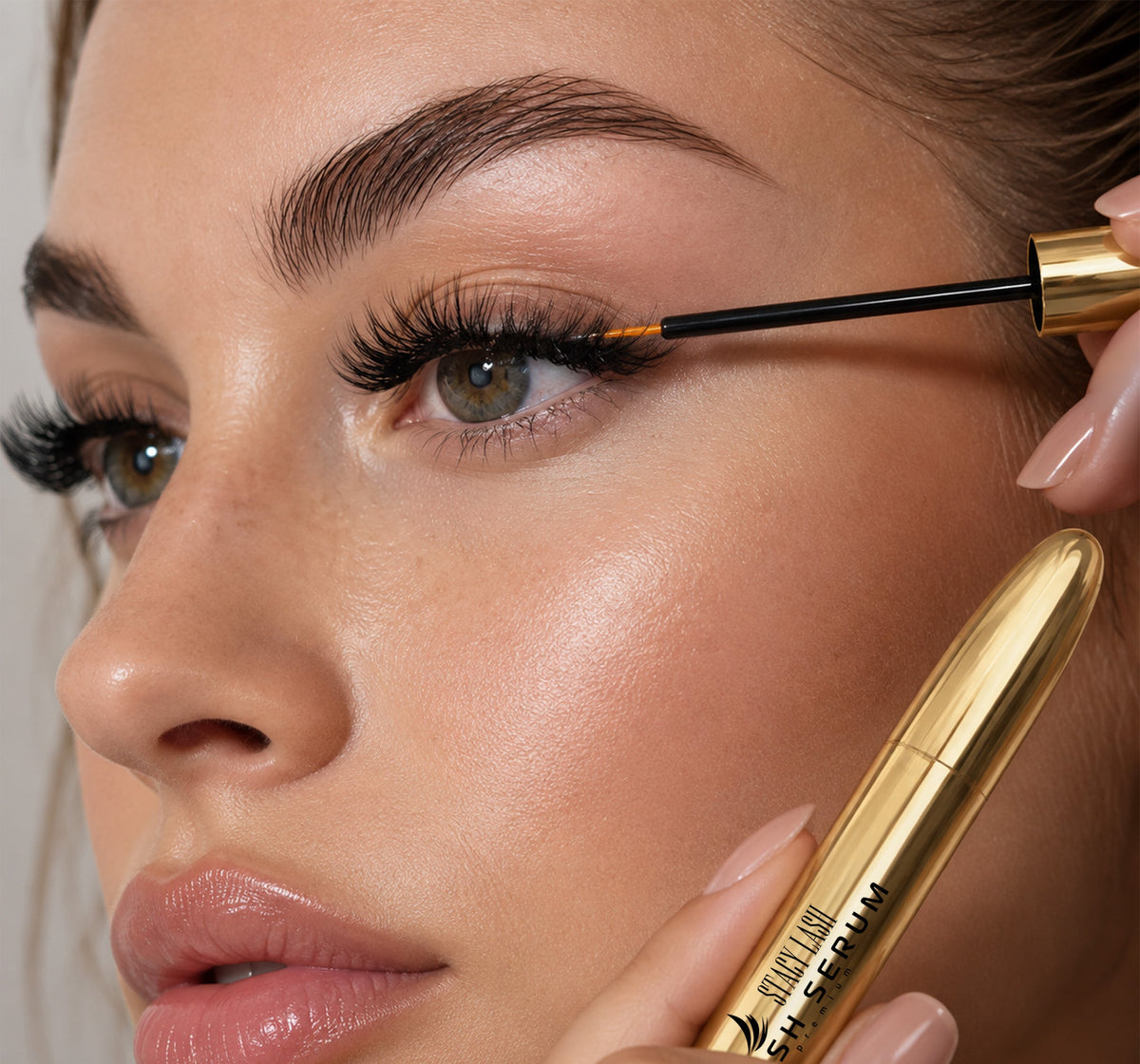
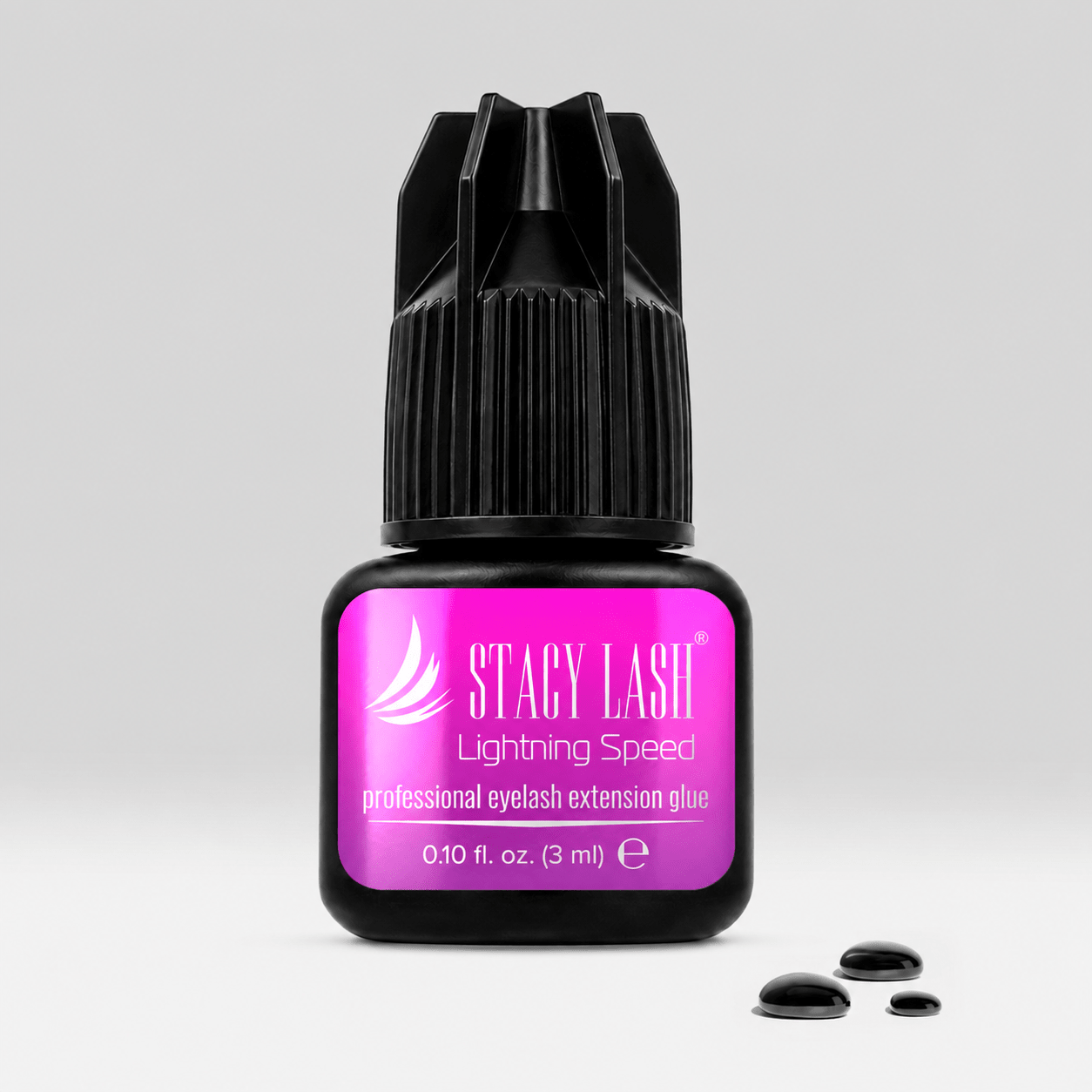
Stacy Lash Serum is another option clients can explore if they're looking for a lash-care product. You can explore Stacy Lash Serum to check the current formula and product directions.
The golden rule? Don't judge the bottle. Read the formula. Because “serum” is a category, not a guarantee.
How to Advise Clients Who Want to Use Growth Serums
This is where you get to be the calm one in the room. Your client may arrive with a serum they've seen everywhere online and say: “Can I use this with my extensions?” You don't need to immediately give them a dramatic courtroom verdict. Instead, ask a few simple questions.
What exactly is the product?
Get the name. Check the ingredients. Find out whether it's a cosmetic serum, a prescription medication, an oil-based product, or something else.
Where are they applying it?
There's a huge difference between a product intended for the skin around the eye and one that's being brushed directly through the extension fibers.
How often are they using it?
Follow the product's own directions rather than improvising a DIY schedule.
Are they experiencing any irritation?
Redness, swelling, itching, pain, unusual dryness, or other eye symptoms shouldn't be brushed off as “part of the lash serum journey.” Latisse's prescribing information, for example, lists several ocular and periocular adverse reactions.
And finally:
What are you actually seeing at the fill?
Look at the natural lashes. If retention has changed, don't automatically assume the adhesive is the culprit. Check for natural lash shedding, residue, oiliness, breakage, irritation, and changes in the client's routine.
Think detective, not doomsday. You don't need to diagnose anything. You just need to notice what changed. And if a client is using a prescription lash-growth medication and has concerns about side effects, irritation, or whether they should continue treatment, send that question to their prescribing healthcare professional.
Warning Signs to Watch For During Fills
Sometimes the lashes tell you something is off before the client does. During a fill, keep an eye out for changes that don't look like the client's usual shedding pattern.
For example: Unusual lash breakage. If natural lashes look shorter, weakened, or visibly broken, don't simply keep filling over the problem.
Unexpected changes in lash density. A dramatic change in how many natural lashes are present deserves attention rather than a bigger fan and a prayer.
Redness, swelling, itching, or irritation. These aren't “just bad retention.” They're symptoms around the eye, and they shouldn't be ignored. Eyelash extensions themselves can be associated with ocular and eyelid complications, so irritation deserves appropriate attention.
Heavy residue or oily buildup. If the lash line looks coated rather than clean, ask about skincare, makeup, oils, and serum use.
A sudden change after introducing a new product. This is one of the biggest clues. Ask what changed in the client's routine since their last appointment.
New serum? New eye cream? New cleansing oil? New medication? New aftercare product? You don't need to play Sherlock Holmes with a magnifying glass. Sometimes the answer is sitting right there in the client's bathroom cabinet.
And if there are concerning eye symptoms, don't try to diagnose the cause from the lash bed. Recommend appropriate medical evaluation.
FAQ
Q: Will Latisse make my lash extensions fall out faster?
A: Latisse is intended to affect the growth of natural eyelashes, and changes in the natural lash cycle can affect when extensions shed because extensions are attached to those natural lashes. Latisse also has documented ocular, eyelid, and lash-related adverse effects.
If a client notices a significant change in shedding, irritation, or other symptoms after starting Latisse, they should discuss it with their prescribing healthcare professional.
Q: Can I apply growth serum around the lash line with extensions on?
A: It depends entirely on the product. For cosmetic serums, check the manufacturer's directions and ingredients. An oil-free formula specifically designed for use around the lashes and labeled as compatible with extensions is generally a more suitable choice than an oil-based product. Some lash serums are specifically marketed as oil-free and extension-compatible.
Q: Is castor oil safe to use with lash extensions?
A: Castor oil is an oil-based product, so it isn't the kind of ingredient we'd recommend deliberately coating extension bonds with. If a client wants to use a lash-conditioning product while wearing extensions, an oil-free formula specifically intended for the lash area and compatible with extensions is a more straightforward option.
The bigger takeaway? Don't let the word “natural” do all the talking. Natural doesn't automatically mean extension-friendly, and “serum” doesn't automatically mean oil-free.
Read the ingredients. Check the directions. Look at the lashes in front of you. Because when it comes to lash extensions, the little details are usually the ones holding the whole story together.




Dejar un comentario
Este sitio está protegido por hCaptcha y se aplican la Política de privacidad de hCaptcha y los Términos del servicio.