

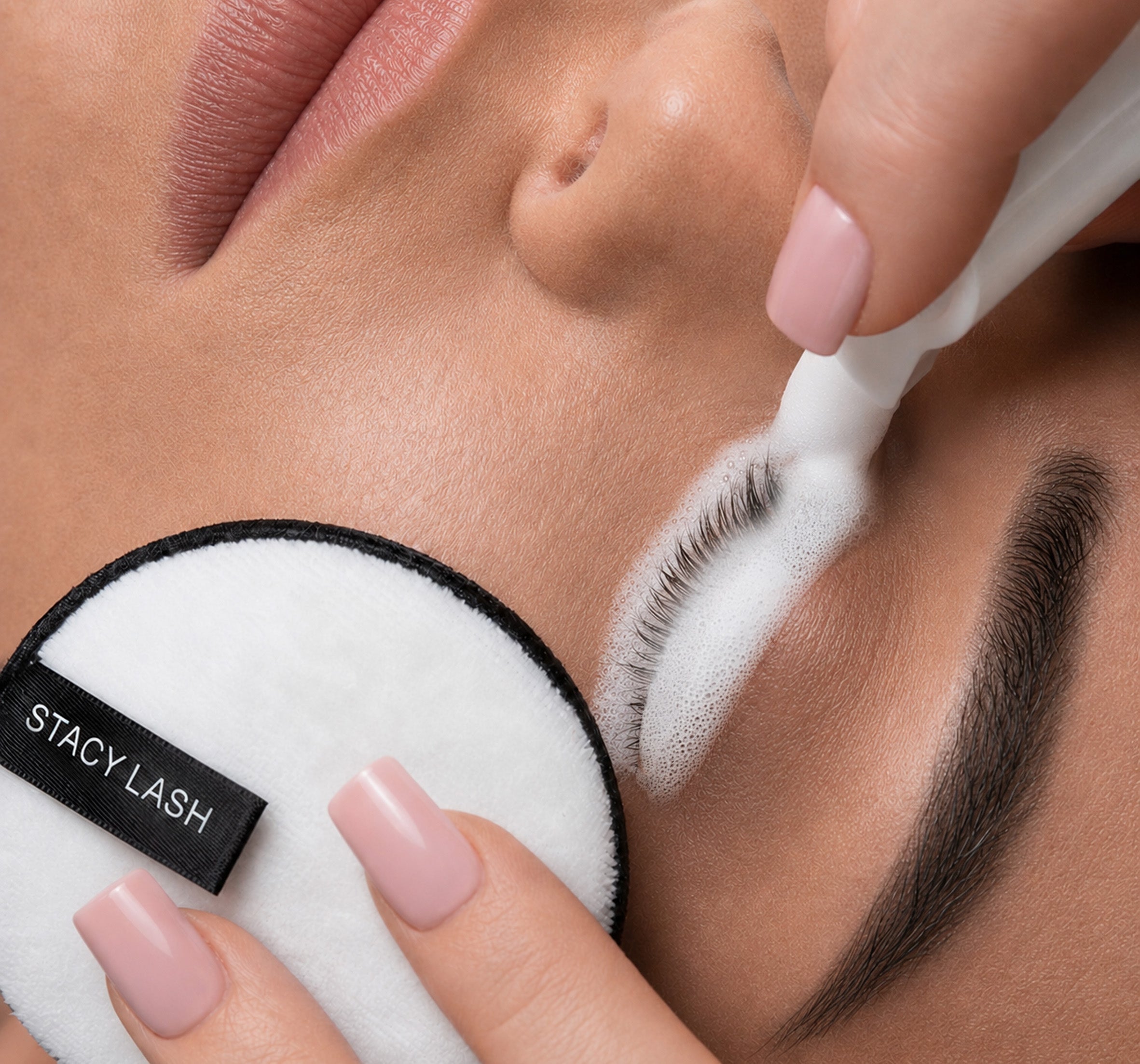
What Happens If You Don’t Wash Your Eyelash Extensions?
Let's be honest: washing your lash extensions probably isn't the most exciting part of your beauty routine. Nobody wakes up thinking, "You know what sounds fun? A thorough cleansing session for my eyelashes."
But if you wear extensions, skipping lash cleansing isn't one of those little beauty shortcuts that nobody notices. Your lashes are sitting right next to your eyelids all day, collecting natural oils, makeup, dead skin cells, dust, sweat, and whatever else your face encounters.
And when all that stuff hangs around? The hell breaks loose.
Dirty eyelash extensions can look clumpy, feel uncomfortable, shed earlier than expected, and make it harder for your lash artist to work during your next appointment. In some cases, poor eyelash extension hygiene can also contribute to eyelid irritation and other problems.
So, what actually happens if you don't wash your extensions? Let's get into it.
Why Eyelash Extensions Need Regular Washing
Your face isn't a museum exhibit. Though even this stuff needs to be wiped off dust from time to time. Your skin naturally produces oil. You sweat. You sleep. You touch your face. You wear makeup. You walk outside where there's dust and pollution. Dead skin cells naturally shed around your eyes.
All of that can end up around your lash line.
Then there's the extensions themselves. Because they're attached to your natural lashes, anything sitting around the lash line can collect between the fibers and create eyelash extension buildup. And no, you don't need to be wearing a full face of makeup for this to happen. Even someone who wears absolutely no makeup can still have plenty of natural oil and debris around the eyes.
This is why cleansing is something you should never underestimate.
Signs Your Lash Extensions Need Cleaning
Sometimes your lashes will tell you before you do. You might notice:
- A little buildup around the lash line
- Extensions sticking together
- Flakes or residue between the lashes
- Itching or irritation
- Lashes feeling heavier than usual
- Makeup collecting around the extensions
- Premature shedding
And here's a fun little reality check: if you can visibly see stuff sitting between your lashes, it's probably time for a wash.
Extensions should look fluffy and separated. If your lashes are sticking together, don't start picking at them. That's how a small problem turns into a broken natural lash.
Grab your lash shampoo, cleanse gently, rinse thoroughly, and let them dry before brushing them back into place.
Can Dirty Lash Extensions Affect Retention?
Yep. And this is where lash retention enters the chat.
Your adhesive needs a clean surface to form and maintain a strong bond. When natural oils, makeup residue, skincare, and debris build up around the attachment points, you're creating an environment where the extensions may not perform as well.
This doesn't mean every lash that falls out early is automatically the client's fault. Absolutely not. Retention can be affected by adhesive choice, application technique, natural lash growth, humidity, temperature, skincare, lifestyle, and plenty of other factors.
But poor cleansing? It certainly isn't helping.
There's another issue that lash artists know all too well. Imagine your client comes in for a refill, and instead of clean, separated lashes, you're looking at three weeks of accumulated makeup, oil, and residue. Now you've got cleanup to do before you can even start properly assessing the set.
That takes time. And more importantly, it makes precise application harder. A clean lash line gives your artist a much better canvas to work with.
Lash Mites and Poor Eyelid Hygiene
Okay, let's talk about the thing that tends to make people panic: lash mites. You've probably seen the term "eyelash mites" online and immediately thought, Absolutely not. I'm closing the internet. Fair.
The mites people are usually talking about are Demodex, microscopic organisms that can live naturally around hair follicles and oil glands, including around the eyelashes. And here's the important part: their presence doesn't automatically mean someone is dirty or has poor hygiene.
Demodex can be found on healthy people, and having them isn't something you should try to diagnose yourself based on a TikTok, a Google image, or one itchy morning. What does matter is keeping the eyelid and lash area clean.
Regular cleansing helps remove oil, debris, makeup, and other buildup from around the lashes. If you have persistent itching, redness, swelling, crusting, burning, unusual discharge, or ongoing irritation, don't play detective with your eyelashes. A lash artist can help identify when something looks unusual, but they aren't a substitute for a healthcare professional.
If symptoms continue, see an eye doctor or another qualified healthcare provider. Your eyes are not the place for DIY diagnosis.
How Often Should You Wash Eyelash Extensions?
For most people, daily cleansing is a good habit. Yes. Every day. Not "when I remember." Not "when my lashes start looking questionable." Daily.
If you have oily skin, work out frequently, live in a hot or humid climate, spend lots of time outdoors, or wear eye makeup regularly, you may need to be especially consistent with cleansing.
A gentle eyelash shampoo or lash cleanser designed for extensions can make the process quick and easy. Wet the lashes, apply the cleanser gently, rinse thoroughly, and pat dry.
No aggressive rubbing, tugging or trying to manually separate every lash with your fingernails. Your extensions are delicate. Treat them like it.
Why Regular Facial Cleansers May Not Be Suitable
Here's where your bathroom shelf can get a little suspicious. Just because something says "gentle facial cleanser" doesn't necessarily mean it's ideal for lash extensions.
Some facial cleansers contain oils or rich ingredients that can leave residue around the lash line. Others may contain cleansing agents that aren't intended for such a delicate area.
And even if a product feels amazing on your cheeks, that doesn't automatically make it the right choice for your eyes. A dedicated lash shampoo is designed specifically with the lash area in mind. That's why having one in your aftercare routine makes sense.
If you're investing in beautiful extensions, don't wash them with whatever random cleanser happens to be sitting next to your sink.
How to Build a Simple Lash Aftercare Routine
You really don't need seventeen products. Keep it simple.
1. Clean your lashes daily.
Use a lash-safe cleanser or lash shampoo to remove oil, makeup, sweat, and debris.
2. Rinse thoroughly.
Don't leave cleanser sitting around the lash line.
3. Be gentle.
No rubbing, pulling, or aggressive towel drying.
4. Let them dry.
Pat gently with a clean towel or allow them to air dry.
5. Brush them once they're dry.
Use a clean spoolie to gently put the extensions back into place.
6. Keep your hands off them.
The less you touch, twist, or pick at your extensions, the better.
And one more thing: don't wait until refill day to start caring about them. Your lash artist can work wonders, but they're not a miracle worker with a tiny pressure washer. Aftercare happens between appointments. That's where you protect the investment you've already made.
When to Contact a Lash Artist or Healthcare Professional
Not every little bit of shedding is a problem. Your natural lashes have their own growth cycle, and extensions naturally fall out with them. But if something feels wrong, pay attention.
Contact your lash artist if you notice unusual retention issues, excessive tangling, poor separation, or problems with the way the extensions were applied.
And if you experience persistent redness, swelling, significant itching, pain, discharge, or other concerning eye symptoms, skip the DIY fixes and speak with a healthcare professional.
Your lash artist can help with your extensions. Your doctor can help with your eyes. Everybody stays in their lane.
Final Thoughts
Washing your eyelash extensions isn't going to ruin them. Not washing them is the bigger problem.
Clean lashes look better. They feel better. They make aftercare easier, help keep the lash line fresh, and give your lash artist a much cleaner canvas at your next appointment. And honestly, the routine is ridiculously simple.
A few minutes a day with a proper lash cleanser can make a huge difference. So if you've been treating lash shampoo like an optional extra...
Consider this your sign. Your lashes don't need a 12-step skincare routine. They just need you to wash them. And yes, your lash artist will absolutely notice the difference. Ready to make lash cleansing part of your everyday routine? Explore Stacy Lash Lash Shampoo and give your extensions the clean, fresh start they deserve.




Dejar un comentario
Este sitio está protegido por hCaptcha y se aplican la Política de privacidad de hCaptcha y los Términos del servicio.