

How to Photograph Eyelash Extensions Like a Pro
Today, your work gets judged faster than a pop song in the first five seconds. Before a client ever enters your room, before they sit on your bed, before you even say “hi,” they’ve already made up their mind. And nine times out of ten, that decision was based on your photos. Lashe pictures aren’t just decoration anymore. They’re your handshake, your portfolio, and your first impression rolled into one tiny square on a phone screen.
Good lash content can open doors. Bad ones can slam them shut and bolt them from the inside. It doesn’t matter if your sets are pure perfection in real life—if your pictures look like they were taken during an earthquake, clients won’t know that. High-quality lash photos tell a story without you having to say a word. They show your flavor, your mastery, your style, and your standards. They quietly say, “I know what I’m doing.”
Photography isn’t about chasing trends. It’s about documenting your work honestly and professionally. It’s a solid proof that you can walk the walk, not just talk the talk.
And let’s be real — in an industry this focused on looks, photos don’t just support your business. They are your business card. They decide who ends up on your lash bed and who vanishes into thin air.
Essential Equipment for Lash Photography
Now let’s talk equipment, because no, you don’t need a full-blown photography studio or a camera that costs more than your car. This isn’t a Vogue shoot. Ok, maybe we need it kinda look like that, but it’s possible.
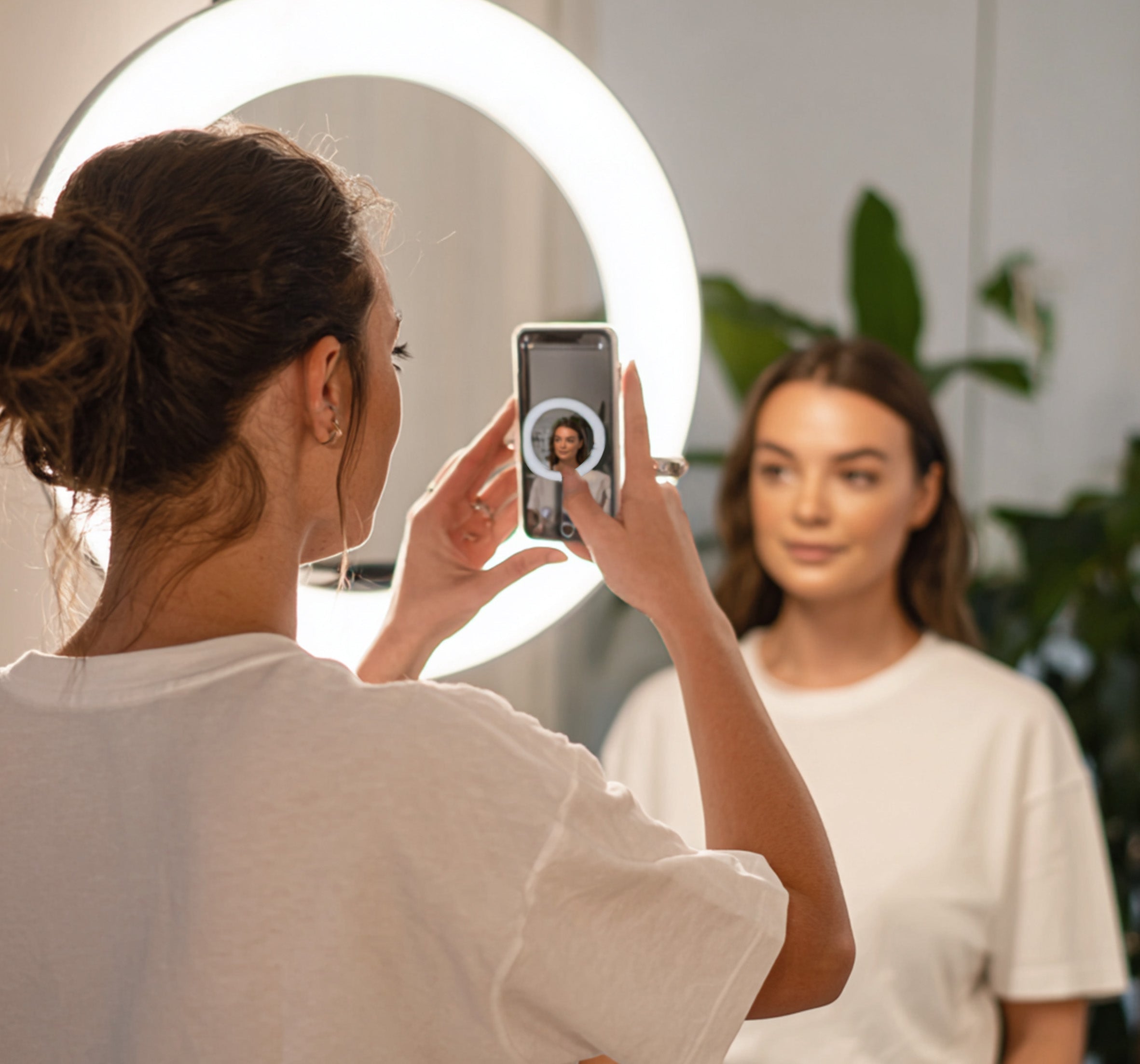
Modern smartphones are honestly capable of doing wonders. In the right hands, they can produce crisp, clean, professional eyelashes pictures that do exactly what they need to do. They’re fast, convenient, and perfect for everyday content. A professional camera can give you more control, sure, but it also comes with a learning curve, a time commitment, and the very real possibility that it’ll end up collecting dust while you grab your phone anyway.
Lighting, though? Lighting is non-negotiable. This is where lash photos live or die. A good ring light or LED panel is worth its weight in gold. Neutral daylight vibes is what we need, not haunted house fluorescents and not warm, orange “sunset” lighting that makes lashes look like they’ve been dipped in pumpkin spice. Proper lighting lets the true color, curl, and density shine through without lying to the eye.
And please, for the love of lashes, stabilize your camera. A tripod or phone stand isn’t fancy—it’s basic survival. If your hands shake even a little (and whose don’t after a long day?), blur creeps in like an uninvited guest. Sharp photos don’t happen by accident. They happen because the camera stayed still and behaved itself.
Lighting: The Make-or-Break Factor
Lighting deserves its own moment because it is the unsung hero of good lash photography. Bad lighting is a thorn in your sight and a slap in the face to your hard work.
Natural light can be beautiful, but it’s also flaky. Clouds roll in, the sun moves, and suddenly your “consistent aesthetic” is out the window. Artificial lighting gives you control, and control is power.
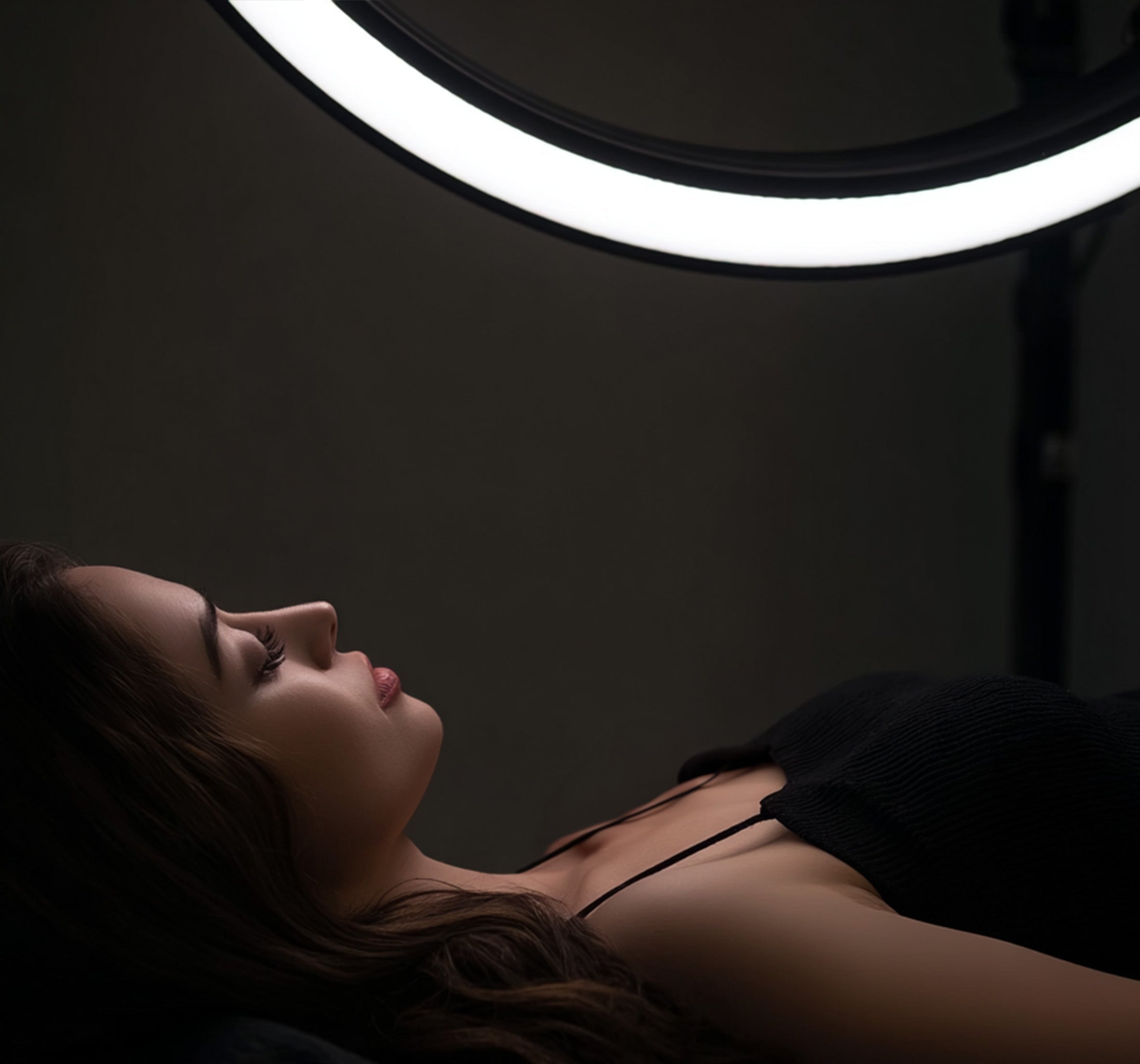
Positioning matters more than people think. Light should come from slightly above the client’s face and angle toward the lashes, like it’s gently spotlighting them instead of interrogating them. Light straight on flattens everything and kills texture. Light from the side adds depth and shows fan structure without casting weird shadows.
And flash? Flash is public enemy number one. Flash lies. It washes out detail, exaggerates shine, and makes lashes look like something they’re not. If flash were a person, it would say, “Trust me,” while actively sabotaging you.
Angles That Actually Show Your Skills
Angles are the other half of the equation, and this is where lash photos either sing or fall flat.
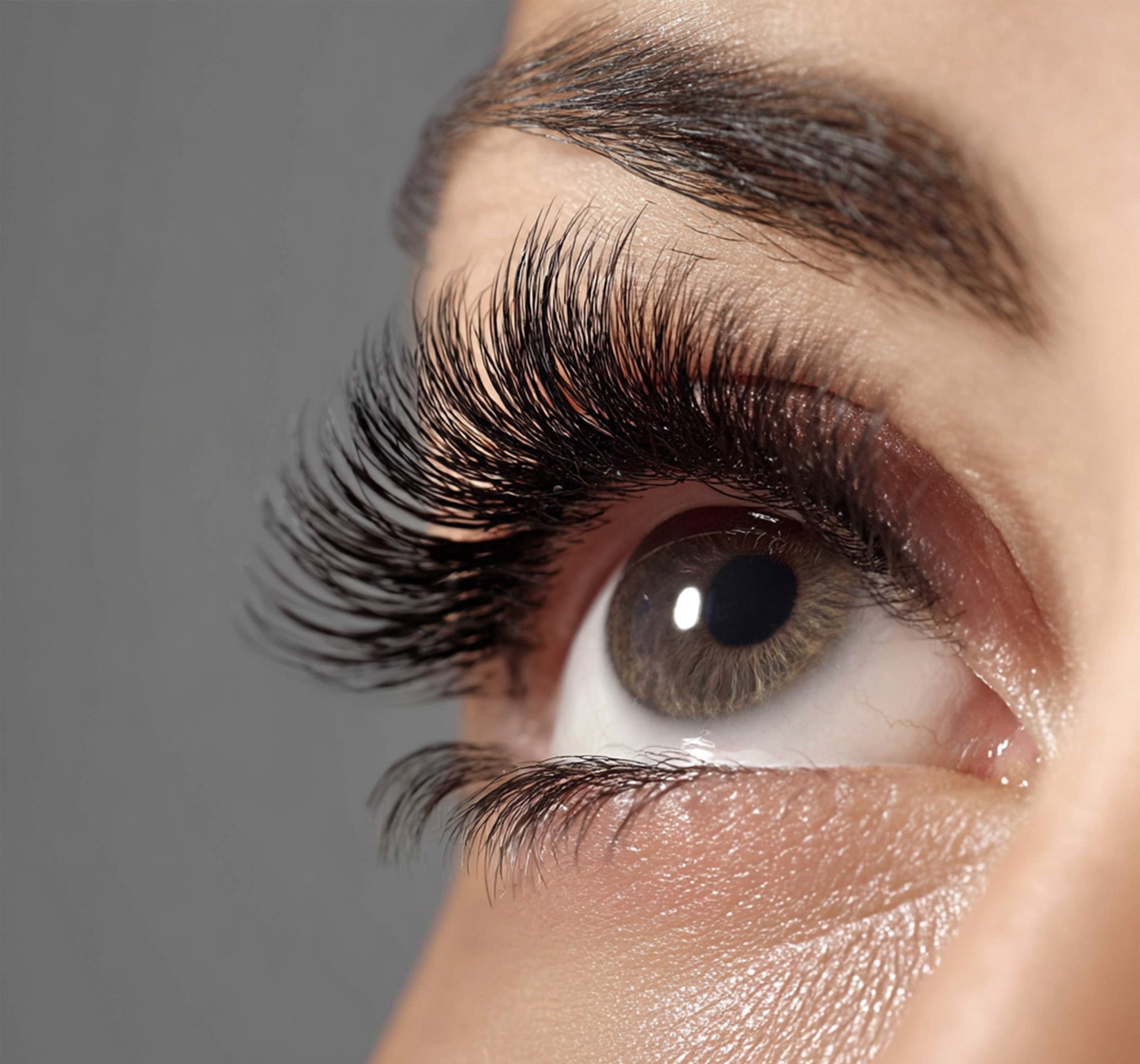
A top-down shot with the eyes closed is perfect for showing symmetry and clean mapping. It’s the classic, reliable angle that never goes out of style—like a good leather jacket. A soft, open-eye angle at about forty-five degrees shows curl, length transitions, and overall vibe. Side profiles are great for showing lift and curl choice without distortion.
Straight-on open-eye shots can be dramatic when done right, but they demand perfect lighting and focus. There’s no room for sloppiness there.
What you want is consistency. When clients scroll your page, your photos should feel like they belong together. Same angles, same lighting, same clean look. Chaos in your feed reads as chaos in your work, even if that’s not true.
Background, Composition, and Visual Cleanliness
Backgrounds matter more than we like to admit. Lashes should always be the star of the show.
Neutral backgrounds are your best friend because they don’t compete for attention. Clean under-eye pads, fresh linens, and zero clutter tell clients you’re professional before they even realize they’re thinking it.
A stray microbrush or a blob of adhesive in the background is like spinach in your teeth—it’s all anyone will see. Simple, clean composition lets your work breathe and makes your sets look intentional instead of accidental.
Directing Clients Like a Pro
Client direction is another make-or-break detail. Most people don’t know how to “wear their face” for photos.
They’ll scrunch, widen their eyes like they’ve seen a ghost, or tense their brows without realizing it. A calm, confident voice goes a long way here. Guide them gently. Ask them to relax, soften their expression, lower their chin just a touch.
When clients feel at ease, it shows. Relaxed faces make lashes look better. Period.
Common Photography Mistakes (We’ve All Been There)
And now, a word about mistakes, because we’ve all made them.
Overexposed photos erase texture and make full sets look sparse. Heavy filters might get likes, but they kill trust. If your photos don’t match real life, clients will notice, and not in a good way.
Dirty tools or messy backgrounds quietly scream “rushed” and “careless,” even if your application was flawless.
Final Thoughts
Photography is an extension of your lash artistry. It’s not separate from your work—it is your work, frozen in time. Great lash photos attract the right clients, justify your pricing, and build credibility without you having to explain yourself. They let your skills speak for themselves.
When you master lighting, angles, composition, and client direction, your lash pictures stop being “content” and start being proof. Proof that you care. Proof that you’re consistent. Proof that you’re a professional.
In a world where everyone is scrolling with one eye half open and attention spans are shorter than a blink, your photos need to be sharp, honest, and confident.
Because in this industry, being good isn’t enough. You have to be seen — and seen clearly.




Dejar un comentario
Este sitio está protegido por hCaptcha y se aplican la Política de privacidad de hCaptcha y los Términos del servicio.