

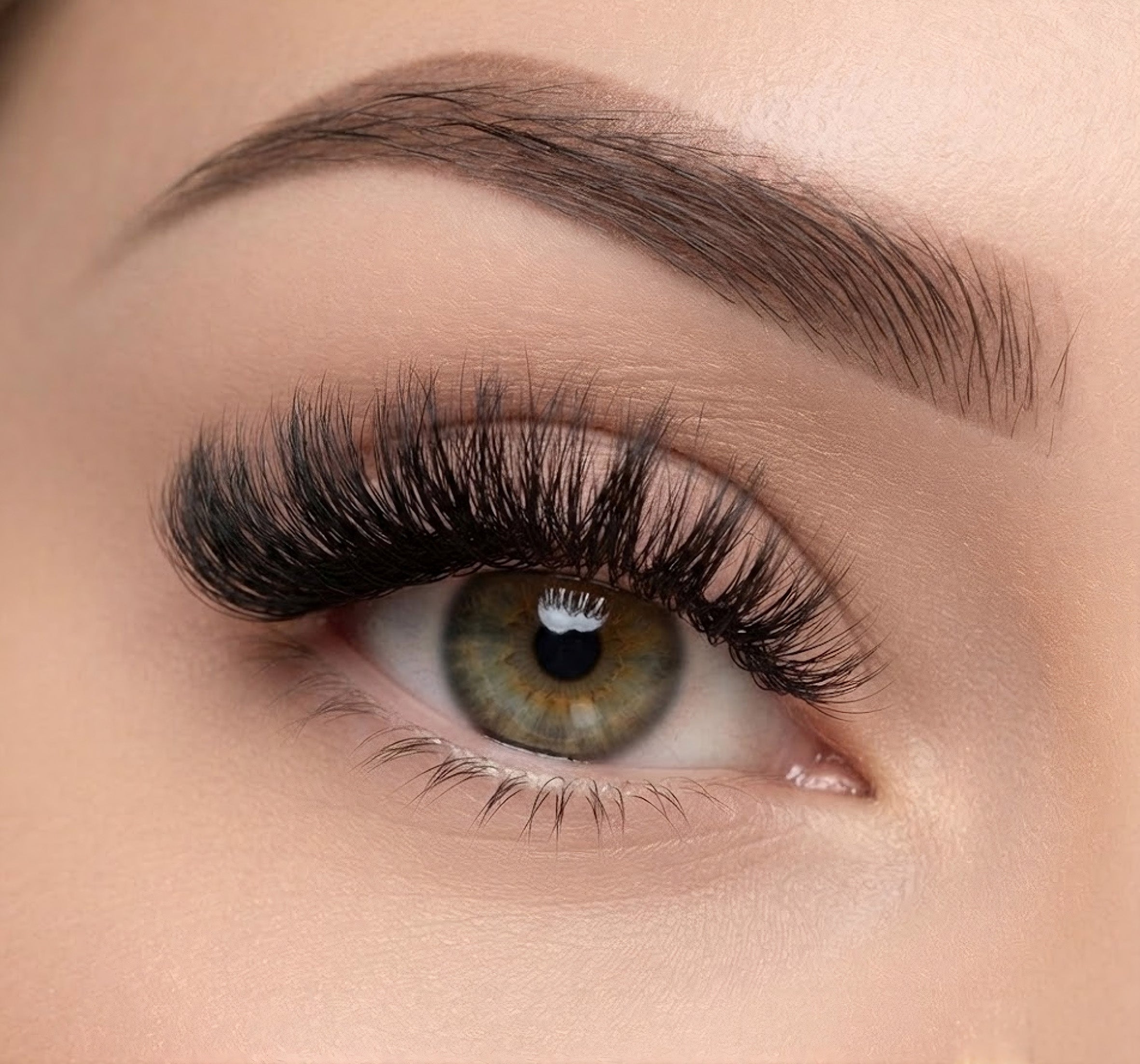
How to Prevent Lash Twisting in Volume Sets
Ok, let’s set the scene. You spend two solid hours staring through your magnifying glasses, meticulously building these gorgeous, perfectly symmetrical volume fans. Every single attachment looks crisp, the top line is completely straight, and your client leaves a generous tip because she looks absolutely stunning. Then, a couple of weeks pass, and she comes back for her fill. You look down, and your stomach completely drops. Half the extensions are pointing sideways, some are flipped totally upside down, and the whole set looks messy.
Yeah, twisted lash extensions are a massive buzzkill. When fans start acting like loose cannons and spinning every which way, it completely ruins the symmetry of your work and triggers major lash extension retention problems. Your client gets annoyed, so she starts picking at them or trying to manually twist them back into place at home, which just shreds her natural lash line. If you’re sick and tired of your beautiful work turning into a tangled, chaotic mess, you need to look under the hood at your application habits.
Why Lash Twisting Happens
Extensions don't just magically decide to start doing the twist on their own. Lash twisting happens because the structural foundation of the attachment is unstable from the jump.
When a fan is attached perfectly with a solid, seamless wrap around a healthy natural hair, it moves with that hair. It stays parallel and handles daily wear. But if that bond is even slightly flawed, or if the fan is top-heavy, it becomes a ticking time bomb. The moment your client sleeps on her side, washes her face, or encounters a stiff breeze, that unstable fan is going to give in to gravity and spin out of control.
The Most Common Causes of Twisting
If your clients are constantly showing up with crisscrossed lashes, you are likely making a few sneaky volume lash application mistakes without even realizing it.
Poor Isolation
Cutting corners here will ruin your meticulous work. If your isolation isn't 100% clean, you are going to end up with stickies, meaning a baby lash or a neighboring hair gets caught up in the adhesive of your fan. As that hidden baby lash keeps growing at its own rapid pace, it will literally drag your beautiful volume fan sideways, forcing it to twist out of alignment.
Incorrect Attachment Angle
When you're rushing to stay on schedule, it's easy to get sloppy with how you place the fan onto the natural hair. If the base of your fan isn't perfectly parallel to the natural lash, or if you drop it on at a weird, crooked angle, you’re making a questionable choice. A tiny fraction of a millimeter off at the base translates to a massive, messy tilt at the tips.
Lash Weight Imbalance
It can be incredibly tempting to create massive, dense mega-volume fans to give a client that ultra-dark look, but if those fans are too heavy for the natural hair to support, gravity is going to win that fight. When a fan weighs too much, the base will buckle, the tip will droop forward, and the fan will inevitably flop over onto its side because it simply lacks the core strength to stay upright.
Weak Direction Control
Good direction control means you are actively steering every single extension so that it points exactly where it should - at a 90-degree angle from the eyelid. If you just blindly drop fans onto the hair without actively guiding their direction with your tweezers until the adhesive grabs, they will follow the natural, sometimes chaotic direction of the client's real lashes.
Natural Lash Growth Issues
Sometimes, it's just biology. Every client has a few rogue natural lashes that grow in totally weird directions. If you try to stick a straight fan onto a naturally twisted hair without correcting the angle during placement, that extension is doomed to spin out of control as it grows.
How to Improve Lash Direction in Volume Sets
Getting your direction locked down requires you to stop staring from a flat, bird's-eye view from behind the client's head. You need to constantly check your work from different angles. Use a dental mirror to look at the set from underneath, and occasionally sit up to look at the lash line from the side. This helps you spot rogue, tilting fans long before the adhesive fully cures.
Another massive tip is to pace yourself with your adhesive. If you are using a glue that dries too slowly for your hands, you’ll place a perfect fan, let go with your tweezers, and that fan will slowly tilt over to the side before the glue actually hardens. Make sure your room's temperature and humidity match your adhesive so it snaps into place the exact second you let go.
Best Lash Diameters to Reduce Twisting
If you want to put an end to volume lash twisting, you need to stop overloading the natural lash line. Choosing the right diameter is half the battle when it comes to keeping your work upright and balanced.
When you're building volume sets, you should be reaching for ultra-lightweight individual lashes that don't weigh down the natural hair. For standard volume sets (2D to 6D), sticking to 0.05 or 0.07 diameters is your safest bet. If you are stepping into mega-volume territory with massive 10D+ fans, you absolutely must drop down to 0.03 diameters. The lighter the fan, the less leverage it has to tip over sideways when your client is going about her day.
Attachment Techniques for Better Stability
The way you physically marry the extension to the natural hair is where the real magic happens. If you are just tapping the fan onto the top of the hair and hoping for the best, you are setting yourself up for a world of hurt.
To achieve bulletproof stability, you want to master the "wrap" technique. When you dip your fan base into the glue and place it onto the natural hair, you want to apply a tiny bit of pressure so the base of the fan slightly hugs or wraps around the natural lash. This creates a seamless bond instead of a flat, weak connection point.
If a client has downward-growing or stubborn lashes, placing your fan from underneath or from the side can sometimes give you a much larger surface area for attachment, providing a much stronger anchor that resists twisting.
Common Mistakes Beginner Lash Artists Make
When you're fresh out of training, it’s completely normal to feel overwhelmed. But there are a few classic traps that almost every newbie falls into that guarantee a tangled set a week later.
The absolute biggest mistake is using way too much adhesive. Beginners often think that more glue equals better retention, but the exact opposite is true. When you scoop up a massive bead of glue at the base of your fan, that extra weight makes the extension incredibly bottom-heavy. The wet glue will sag, slide around the natural hair, and pull the fan sideways before it can dry. Another major pitfall is letting go of the fan way too fast. You can't just drop the lash and sprint to the next one; you need to hold your isolation and placement tweezers steady for a split second to ensure the direction is locked down before moving on.
Advanced Tips for Perfect Direction
If you’ve already mastered the basics but still want to grow stronger, it’s time for some advanced styling logic.
Start practicing the art of "direction correction." When you encounter a natural lash that grows completely crooked, do not follow its natural curve. Instead, attach the base of your volume fan to the straightest part of the root, and manually force the top of the fan to face the correct direction. You might only get a 1mm attachment point at the base, but as long as that bond is wrapped tightly, you can completely disguise a wild, crooked natural lash.
Also, pay close attention to your transitions across the eye map. Lashes should naturally fan outward toward the outer corners and inward toward the inner corners. Actively tilting your tweezers to follow that outward flare as you work your way across the eye will give you that sweep that stays looking perfect until their next fill.
To Sum Up
Keeping your volume sets from twisting out of control is all about discipline. It takes a second to slow down, double-check your angles, ensure your bases are perfectly wrapped, and use high-quality lash extensions that don't overload the client's eyes. Stop rushing through your sets just to shave fifteen minutes off your clock. Invest the time into clean isolation and rock-solid placement from the start, and your sets will grow out beautifully every single time.




Leave a comment
This site is protected by hCaptcha and the hCaptcha Privacy Policy and Terms of Service apply.