


10 Hidden Reasons Your Retention Is Bad
When a client walks out your door, their lashes are on a ticking clock. But if that clock is running out in four days instead of four weeks, you aren't dealing with a bad glue batch, you're dealing with a ghost in your workflow. Eyelash extension adhesive is a chemical diva, and the tiniest, invisible mistake can completely sabotage your bond.
If you're ready to stop guessing why lash retention is bad and start locking down your sets like a pro, let's dive deep into these lash retention tips on how to improve lash retention.
Why Lash Retention Matters More Than You Think
Your business clearly doesn't survive on one-timers, it thrives on the loyal regulars who book out your calendar months in advance. When a client leaves your chair, they are walking advertisement. But if they don’t, there are consequences. Bad lash retention causes:
- The Review Hit: Word of mouth travels fast, but bad news travels like wildfire. A reputation for poor retention will tank your repeat bookings before you can even explain what went wrong.
- The Schedule Chaos: Instead of doing profitable, breezy fills, you find yourself spending extra time diagnosing lash retention problems for free, trying to save a client relationship.
Good retention isn't just a brag for Instagram; it’s the literal backbone of your bank account.
Poor Lash Prep Before Application
You wouldn't paint a dirty car, so why are you lashing a dirty eye? This is the most common pitfall in the entire industry. Even if your client swears up and down that they didn't wear makeup today, their skin is constantly pumping out sebum, shedding dead skin cells, and trapping dust. This microscopic cocktail forms a barrier over the hair cuticle. If your eyelash extension adhesive can’t touch the actual hair, it’s going to stick to literally nothing. The moment they blink hard, that extension is history.
Common Prep Mistakes Lash Artists Make
- The Lazy Wipe: Swiping a makeup remover wipe over the eye area and calling it a day is a one-way ticket to eyelash extension retention failure. Most wipes leave behind a film of glycols or oils that kill glue on contact.
- Skipping the Rinse: If you use a lash bath but don't rinse the soap off completely with distilled water, that dried soap residue acts as a barrier. You need a squeaky-clean canvas.
Incorrect Humidity and Temperature Levels
Your lash room is a delicate chemical ecosystem. If you aren't monitoring the weather inside your room, you’re flying blind.
Lash glue doesn't "dry" by evaporation; it cures through a chemical reaction with moisture in the air.
- Too High: If your room is humid, the glue flash-cures. It looks like it’s attached, but it creates a brittle, weak bond that pops off within 48 hours.
- Too Low: If the air is dry, the glue sits there wet, taking forever to set. This causes the extensions to tilt, slide, or stick to neighboring lashes.
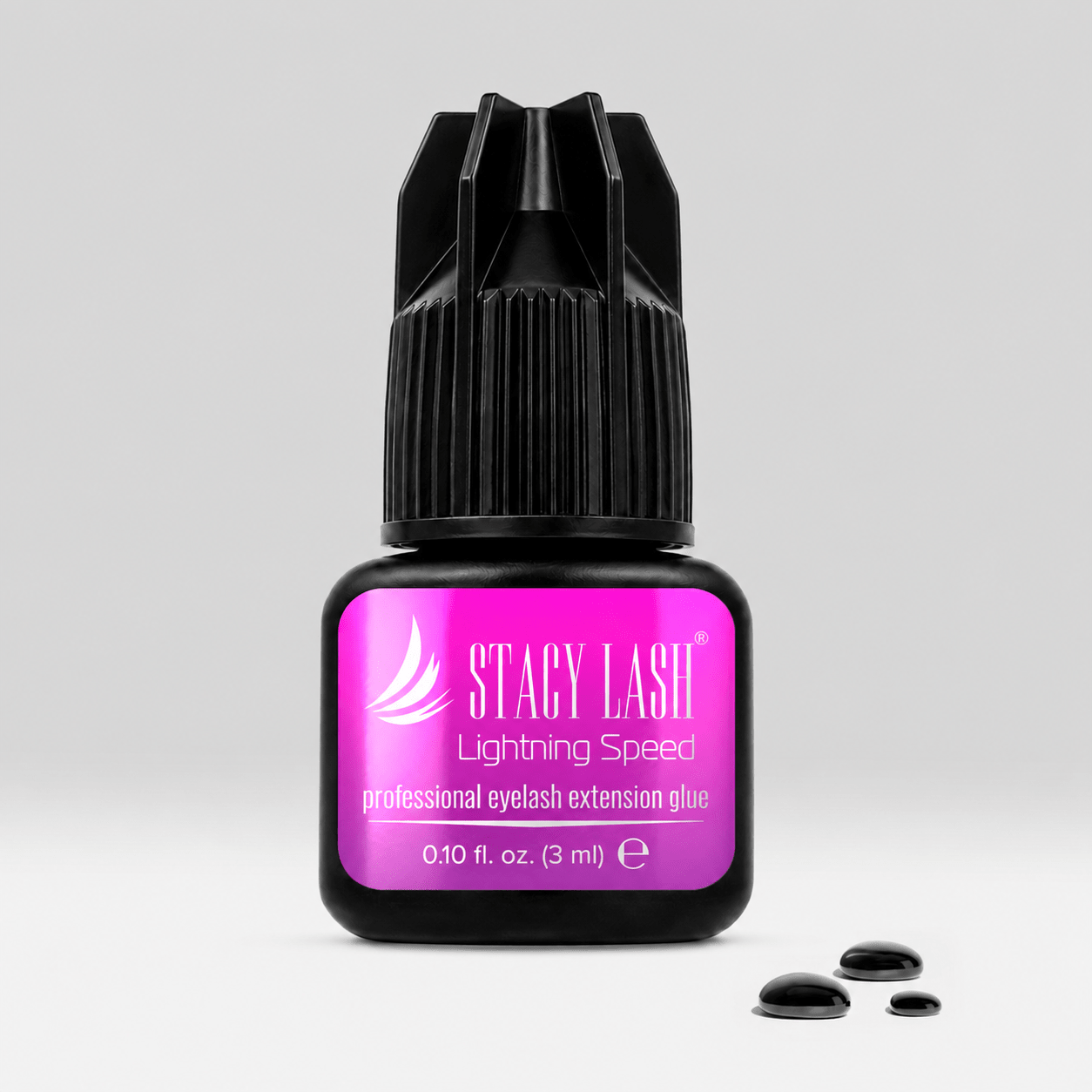
Using the Wrong Lash Adhesive
There are many fish in the sea when you look at the market, and it’s not always easy to find what’s yours. Trying to use an adhesive that doesn't match your actual hand speed is a massive recipe for disaster.
If you’re using a 0.5-second glue but your isolation technique takes you 2 seconds, it will never bond as it should. There is nothing wrong with choosing a slower option. The glue should be your sidekick, you don’t have to let it control your work.
Be honest with your skill level. If you’re still perfecting your placement, step down to a 2-second or 3-second drying glue. It gives you the necessary buffer time to wrap the base properly without the adhesive curing prematurely mid-air.
Improper Isolation During Application
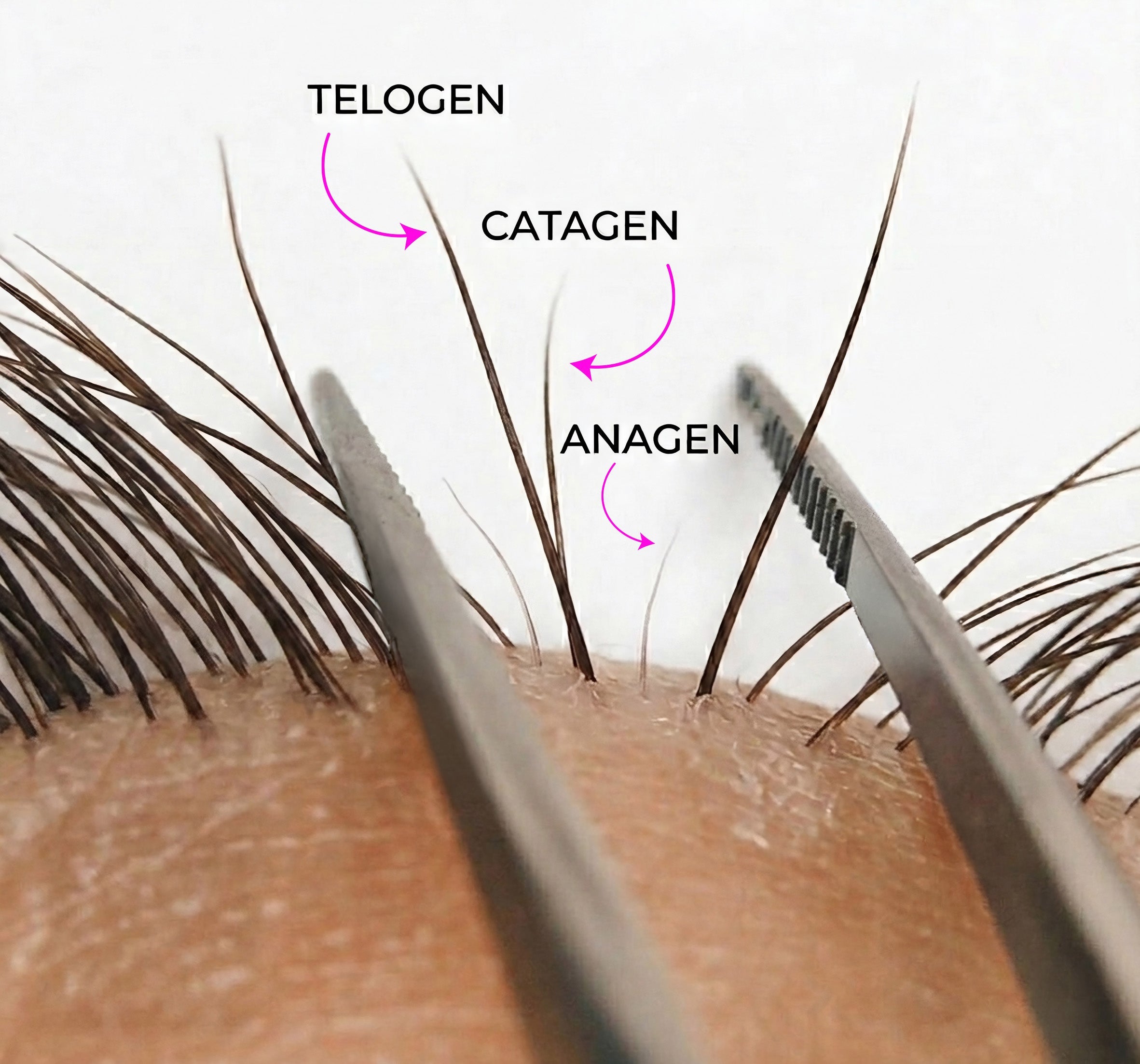
Isolation is tedious, but cutting corners here will destroy your sets and lead to lash extensions not lasting. Stickies happen when an extension glues itself to more than one natural lash, or when baby lashes get caught in the adhesive drop. Natural lashes grow at different speed. When a fast-growing lash is trapped against a slow-growing one, it will tug, twist, and pull the extension out prematurely—causing discomfort and damage.
When each extension is perfectly isolated with on a single natural lash, the hair can grow through its natural cycle freely. The set stays looking neat, feels weightless, and ensures excellent lash extension maintenance down the line because there are no clumps to pick apart.
Too Much or Too Little Adhesive
You want a visible, smooth coating along the base of the extension—typically a small, seamless micro-bead.
- Too Much: Huge globs look messy, take ages to dry, increase the risk of stickies, and cause chemical burns from heavy fumes.
- Too Little: If you scrape all the glue off on your lash tile before placement, there isn't enough material to create a secure structural bond. It will snap off at the slightest touch.
Client Aftercare Mistakes
Sometimes, you do everything perfectly, and the ball gets dropped the second the client walks out your door.
Clients love their skincare routines, but heavy night creams, oil-based makeup removers, and waterproof eyeliners are absolute poison to lash bonds. Educate your clients to check their labels for oils or oily derivatives.
Side-sleepers and stomach-sleepers will always lose lashes faster on one eye. The constant friction against a pillowcase mechanical forces the extensions to twist and peel away from the base. Advise them to switch to a silk or satin pillowcase to minimize the drag.
Natural Lash Health Problems
You can only build on what’s already there. If the foundation is weak, the structure won't hold. If a client comes to you with sparse, broken, or over-processed lashes, their hair cuticle is compromised. Damaged hair doesn't hold adhesive well. In these cases, you need to scale back the weight or recommend a lash serum break before trying to build a mega-volume set.
Seasonal Shedding Explained
Human beings naturally shed between 2 and 5 lashes per day, per eye. During spring and autumn, our bodies go through a natural hormonal shift, causing a faster lash turnover rate. If your client loses 5 lashes a day, that’s 35 lashes gone in a single week. It’s completely normal, but you need to manage their expectations so they don't blame your technique for a natural body process.
Incorrect Lash Weight or Length
Bigger isn't always better. Going too heavy is a classic rookie mistake that ruins retention and natural lash health.
If a client has fine, short natural lashes and you slap a heavy 0.20 classic or a dense 15mm volume fan on them, gravity wins every single time. The weight causes the natural lash to droop, twist sideways, and eventually detach way before its time because the root simply cannot support the load.
Always follow the rule of thumb: extensions should never be more than 2-3mm longer than the natural lash, and the weight must match what the natural hair can safely bear. Educate your clients on lash health over dramatic length.
Poor Lash Placement Technique
Placement is equally important as other factors, and a bad attachment angle ruins everything. The sweet spot for placement is exactly 0.5mm to 1.0mm away from the lash line.
- Too Close: If you glue the extension to the skin, it causes itching, swelling, and blocks the hair follicle.
- Too Far: If you place it 2mm away, the extension is instantly top-heavy. It will twist, catch on the lash brush, and lever itself off the natural hair.
The base of the extension must flush perfectly against the base of the natural lash. If the base is, dirt and oil will get trapped underneath, acting like a wedge that peels the extension away within days.
Cheap or Low-Quality Lash Products
If you are buying your lash tools from unverified discount sites just to save a few pennies, your retention is going to reflect that choice.
Cheap adhesives often have inconsistent manufacturing standards. One bottle works, the next just doesn’t. High-quality professional supplies ensure that the chemical composition is stable, the retention is predictable, and the fume levels are kept to a safe minimum.
FAQ
Q: What is considered good lash retention?
A: A good set of lash extensions should look reasonably full for 3-4 weeks, depending on the client’s natural growth cycle. However, because we lose natural lashes daily, fills are typically required every 2 to 3 weeks.
Q: Why do lash extensions fall out after a few days?
A: If lashes are popping off within 48 to 72 hours without the natural lash attached, it’s a bonding failure. This is almost always caused by poor prep (oils on the hair), incorrect room humidity, or the adhesive drying on the extension before it was placed.
Q: Does humidity affect lash retention?
A: Absolutely. Humidity is the driving force behind how your glue cures. High humidity makes the glue cure too fast and become brittle, while low humidity stops it from curing on time, creating stickies and poor bonds.
Q: How can lash artists improve retention fast?
A: Start by using a hygrometer to fix your room conditions, thoroughly wash the lashes with an oil-free shampoo before every set, and make sure your placement speed perfectly matches the drying time of your glue.




Leave a comment
This site is protected by hCaptcha and the hCaptcha Privacy Policy and Terms of Service apply.