

Coping with client’s concerns: natural lash cycles
There isn’t a single lash artist who hasn’t dealt with a client hitting the panic button. Like when you get a photo of a close-up of two lash extensions she found on her vanity, and she’s convinced her eyes are going bald. Before you roll your eyes or start sweating through your scrubs, remember: to her, this looks like a glitch in the system. To you, it’s just Tuesday.
Education is the best cure for client anxiety. When you can explain exactly why her lashes are jumping ship, you move from "the girl who does my lashes" to a trusted expert. Let’s dive into how to explain lash shedding to clients without losing your cool.
Why Clients Notice Lash Shedding More With Extensions
It’s a classic case of not knowing what you’ve got until it’s gone—literally. When a natural lash is bare, it’s basically a ghost. It falls out, floats away, and nobody is the wiser. But give that same lash a dark, voluminous extension to carry? Now it’s got a main character presence.
Once your client gets used to seeing herself with a thick, lush fringe, her brain resets the baseline for what’s "normal." She forgets that her natural lashes were ever sparse or fair. When a single extension drops, it leaves a gap that feels as big as a missing tooth.
Normal Daily Lash Loss Becomes More Noticeable
Natural lash shedding is happening 24/7, but extensions make the process impossible to ignore. A shed lash with an extension attached is longer, darker, and much heavier. It doesn’t just disappear; it lands on the cheek or the pillow like a tiny, feathered evidence marker. It’s not that she’s losing more lashes; she’s just finally seeing the ones she’s been losing her whole life.
What Is the Natural Lash Growth Cycle?
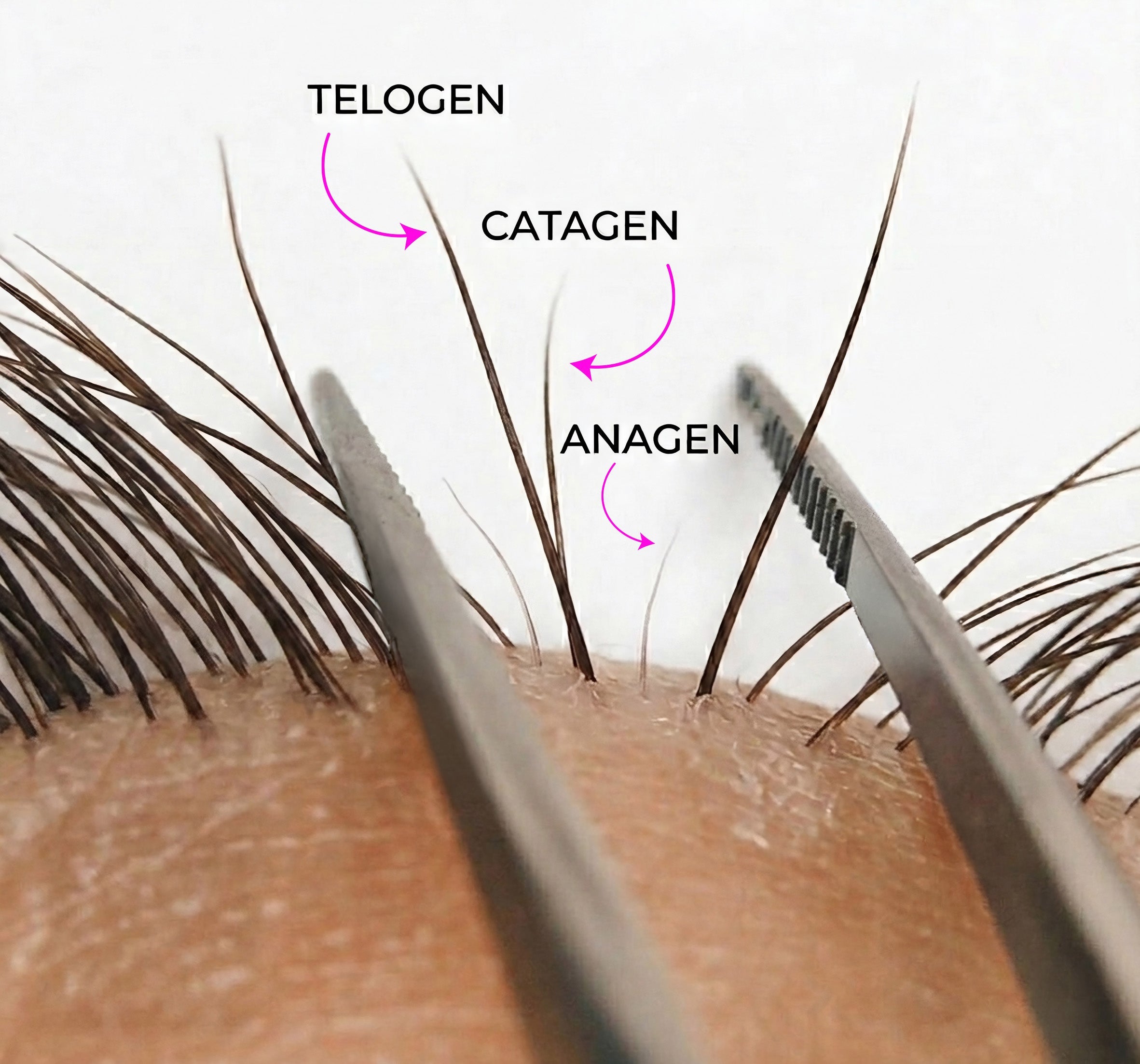
Not every lash is on stage at the same time; some are just getting started, like actor newbies, some are the stars of the show, and some are about to be written out of the script.
Anagen Phase (The Newbies)
This is the active growth stage. These lashes are the "babies" of the bunch, popping out of the follicle and growing like weeds. This stage lasts about 4–6 weeks. Since they’re still growing, you want to be careful not to weigh them down too heavily, or you’ll stunt their potential.
Catagen Phase (The Transition)
This is the "middle child" phase. The lash has finished growing, and the follicle starts to shrink. It’s essentially just hanging out, living its best life, and staying put for a few weeks. These are your "anchor" lashes—they provide the best stability for your sets.
Telogen Phase (The Final Act)
The natural lash cycle ends here. This is the resting phase. The lash is dead and just waiting for a new baby lash to sprout underneath and push it out. When a client asks, "Why are my natural lashes falling out?" the answer is usually: because the next generation is ready to take over.
Is It Normal to Lose Natural Lashes Every Day?
In a word: Yep. If we didn't shed, we’d have lashes down to our collarbones by the time we hit thirty.
A healthy person loses between 2 and 5 lashes per day, per eye. Do the math over a three-week fill cycle, and that’s a whopping 42 to 105 lashes gone. When you put it that way, it’s a miracle they have any extensions left at all!
When Shedding Becomes Excessive
How do you know if someone is actually having natural eyelash loss issues?
- The Green Flag: If the extension falls out and you see a natural lash still glued to the base, that’s a win. It means your bond was stronger than the hair’s lifespan.
- The Red Flag: If the eye looks patchy, red, or the lashes are snapping off in the middle, something is not right. But if the hair cycle is simply finishing its lap, there’s zero reason to worry.
Seasonal Lash Shedding Explained
Just when you think you’ve got a client convinced, the seasons change and her lashes start falling like autumn leaves.
Why Do Lashes Shed More in Spring and Fall?
It sounds like a tall tale, but seasonal lash shedding is 100% backed by science. As the daylight hours shift and temperatures swing, our bodies go through a mini-reset.
- In the Spring, our bodies prepare for the heat by shedding excess hair.
- In the Fall, the drop in humidity can make lashes more brittle, pushing more of them into the Telogen phase at once.
During these peak times, "perfect retention" goes out the window. A set that usually looks fresh for four weeks might start having bald spots at day ten. Warn your clients that the answer to this dreaded question “why do lashes shed more in spring and fall” is just biology’s way of updating its wardrobe.
Do Lash Extensions Damage Natural Lashes?
This is the fear that keeps lash lovers awake at night. They’ve seen the horror stories on TikTok and think they’re one appointment away from total baldness.
Proper Application vs. Damage
Extensions don't cause damage, bad technicians do. If you use proper isolation, the natural lash can grow, rest, and shed without being bothered. Damage happens when stickies occur. When one lash tries to grow while glued to a neighbor that’s trying to shed, it creates a tug-of-war that the follicle loses.
Importance of Lash Weight and Isolation
To keep healthy natural lashes, you have to be the weight police. You cannot put a heavy volume fan on a tiny baby lash. If the extension is too heavy, it puts premature stress on the root, causing it to bail out before its time.
Why Natural Lashes May Look Shorter After Removal
We’ve all had the client who takes a break and suddenly thinks her lashes have shrunk.
Visual Contrast
This is pure lash blindness. After weeks or months of seeing yourself with 12mm D-curls, your 7mm natural lashes look like stubble. It’s an optical illusion.
Natural Lash Growth Stages
Because lashes are always in different lash growth stages, some will always be shorter than others. When the extensions come off, people see "babies" (Anagen) and "adults" (Catagen) all at once, and it feels underwhelming compared to the drama of a full set.
How Lash Artists Can Educate Clients About Shedding
Don’t wait for the frantic text. Be the expert from the jump.
- Consultation Tips: Mention the 2-5 lash daily loss rule before you even touch a pair of tweezers.
- Before and After Photos: Take "naked" lash photos at every fill. If she ever thinks her lashes are thinning, show her the receipts.
- Setting Realistic Expectations: Tell them flat out: "Your lashes are going to fall out, and that’s a good thing. It means your body is healthy."
How to Support Healthy Natural Lashes During Shedding
When the Great Shed hits, you’ve got to pivot your strategy.
During peak shedding seasons, scale back. Use lighter diameters or shorter lengths. It keeps the remaining lashes from feeling the strain.
Suggest moving from a 3-week fill to a 2-week fill during the spring and fall. It keeps the set looking full and stops a client from picking at the gaps.
If client’s natural lashes are looking a bit "tired," be a pro and suggest a break. A month off with a high-quality lash serum can work wonders.
From "Tech" to "Lash Whisperer"
You operate as part-time scientist and part-time therapist. Most of the emergency messages hitting your inbox aren't actually about your handiwork, they're about a client who hasn't realized how their own body functions. Pulling back the curtain on the eyelash growth cycle replaces panic with professional insight.
Walking your clients through the reality of natural lash shedding builds a relationship based on trust. Once they grasp that losing a few lashes is a sign of healthy natural lashes doing their thing, those frantic 8 AM texts turn into casual "see you at my fill!" reminders.





Leave a comment
This site is protected by hCaptcha and the hCaptcha Privacy Policy and Terms of Service apply.