

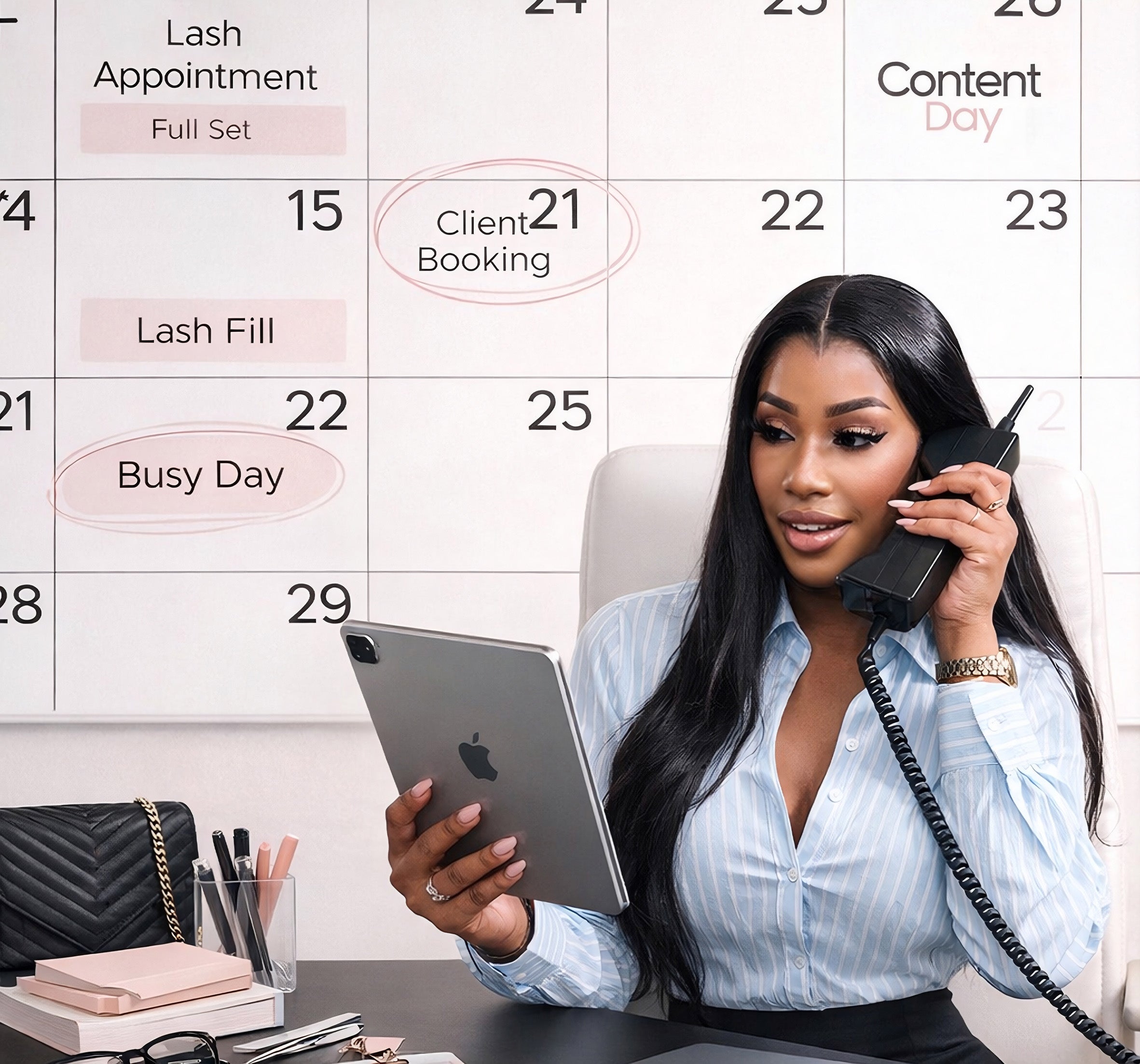
Booking Gaps? How to Analyze Your Lash Calendar Strategically
Nothing humbles a lash artist faster than staring at a half-empty calendar on a Tuesday afternoon, sipping your third coffee like you’re in a low-budget indie film about “finding yourself.” You didn’t spend hours perfecting your isolation, investing in premium lash extensions materials, and building your brand just to sit there refreshing your booking app from time to time.
Booking gaps are not random. They’re not bad luck. They’re not Mercury being in retrograde messing with your client list (although honestly, sometimes it does feel personal). There are patterns, and once you start seeing them for what they are, you can stop guessing and start fixing.
Welcome to the world of lash booking optimisation, where your calendar stops looking like Swiss cheese and starts working for you, not against you.
Identifying Problem Areas in Your Schedule
First things first, you’ve got to play detective. Numbers don’t lie, even if your gut sometimes does. Take a hard look at your calendar over the past month or two. Not a quick glance. But like, really sit down and analyse it like you’re a decoder.
You’ll probably start noticing patterns. Maybe your mornings are dead quiet, but your evenings are fully booked. Or maybe weekends are a goldmine while Wednesdays feel like a ghost town.
These are your “idle zones” - the times where your chair is empty, your tools are clean, and your bank account is quietly judging you.
On the flip side, you’ve got your peak hours. Those are your prime-time slots where everyone wants in. That’s your Friday evenings, your Saturday afternoons - basically your calendar’s version of a sold-out concert.
Now here’s the kicker: if you don’t recognise these patterns, you can’t fix them. And if you can’t fix them, you’re kind of stuck. Efficient lash appointment management starts with awareness. You can’t optimise what you don’t understand.
Using Data to Optimise Booking
Alright, now that we’ve spotted the problem areas, it’s time to bring in the big guns: data.
Start tracking your cancellations. Not just how many - but when they happen. Are clients ghosting you 24 hours before their appointment? Same-day bailouts? Patterns will show up, and when they do, it’s like flipping on the lights in a dark room.
Next up: your average service duration. Be honest with yourself here. If you say your full set takes two hours, but in reality it’s closer to two and a half because you like to chat, adjust, re-check, and perfect every lash like you’re restoring a Renaissance painting… then guess what? Your calendar is lying to you.
Overbooking, underbooking, and misjudging time blocks are some of the biggest culprits behind chaotic schedules.
This is where client flow optimisation comes into play. When your timing is accurate, your bookings are realistic, and your gaps are intentional, not accidental, you start running your day like a pro.
And let’s be real - nothing feels better than finishing your last client on time, cleaning up, and walking out like you just nailed a perfect performance.
Strategies to Fill Gaps
Now for the million-dollar question: how do you actually fill those gaps without turning into a discount machine or chasing clients like you’re in a rom-com about high school?
First off - visibility is everything. If people don’t know you have availability, they’re not going to book it. Sounds obvious, but you’d be surprised how many artists just quietly hope someone magically appears. Start using your platforms smarter. Got an open slot tomorrow? Post it. Make it casual, make it fun.
This is where salon scheduling tips get really practical. You don’t need a massive campaign, you need consistency. Loyalty incentives also go a long way. Reward your regulars for sticking with you. Maybe it’s priority booking, maybe it’s a small perk after a certain number of visits. People love feeling valued, it’s human nature.
And let’s talk about promotions, but not the kind that scream you’re desperate for new bookings. Nobody wants that energy. Instead of slashing prices across the board, be strategic. Offer something limited, something targeted. Fill a slow Tuesday with a small incentive rather than discounting your busiest Saturday.
You’re not a clearance rack - you’re a professional. The goal here is to reduce idle time without reducing your value. Big difference.
Automation & Scheduling Tools
Now let’s bring in the MVPs of modern business: automation and scheduling tools. Because if you’re still managing everything manually, you’re working harder, not smarter.
Booking software is your best friend. It handles appointments, sends reminders, confirms bookings - all while you’re busy doing what you actually love: lashes.
Automated reminders alone can cut down no-shows like a hot knife through butter. People forget things. It’s not personal. But a quick reminder? That’s a game-changer.
Confirmations are another must. Make clients actively confirm their appointment. It creates accountability and gives you a heads-up if someone’s about to flake.
And let’s not forget waitlists. If someone cancels, you don’t want that spot sitting there like an empty seat at a concert. Fill it. Quickly.
This is how you build an efficient lash calendar - one that adapts, responds, and keeps moving.
The Bigger Picture
Here’s the thing nobody tells you when you start in this industry: being good at lashes is only half the battle. The other half? Running a smart, organised, strategic business.
You can have the cleanest sets, the fluffiest fans, the kind of work that makes other artists stop scrolling - but if your calendar is a mess, it’s like having a sports car with no gas. Looks great. Goes nowhere.
When you start treating your schedule like a system instead of a guessing game, everything changes. Your income stabilises. Your stress drops. Your confidence goes through the roof.
And suddenly, those awkward mid-day gaps? They’re either gone, or they’re intentional breaks where you actually get to breathe, eat, maybe even live a little.
Conclusion
Booking gaps aren’t the enemy, they’re feedback. They’re your calendar waving a little flag saying, “Hey, something here needs attention.” And once you start listening, analysing, and adjusting, you stop reacting and start leading.
So take a step back. Look at your schedule like a strategist, not just a service provider. Tweak your timing. Track your patterns. Use your tools. Show up consistently.
Because at the end of the day, a fully booked calendar isn’t luck. It’s design.







Leave a comment
This site is protected by hCaptcha and the hCaptcha Privacy Policy and Terms of Service apply.