


Lash Artists’ Eye Health: Why Lighting Matters
(A Love Letter to Your Eyeballs, Because They Deserve Better)
If you’re a lash artist, your eyes aren’t just tools — they’re the Beyoncé, the Batman, the Katniss Everdeen of your business. They’re doing all the heavy lifting, saving the day, and carrying the whole franchise.
And yet… so many lash artists treat their eyes like disposable side characters instead of the main event.
Bad lighting?
Wrong lamp?
Squinting like they’re trying to read a street sign in a horror movie?
Lighting is not optional — it’s the whole cornerstone of your lash career. Let’s talk about why the right lighting setup can save your vision, boost your work quality, prevent headaches, and keep you from feeling like a raccoon that’s been up scrolling TikTok until 3 AM.
Your Eyes Work Overtime — Give Them a Break
Lashing is basically micro-surgery done with tweezers while you’re slightly hunched over another human who trust you with the most precious thing – their lashes
You’re dealing with:
- Tiny fibers
- Small sections
- Delicate isolation
- Shadows
- Angles
- Clients with restless eyes
That requires eye focus worthy of a NASA engineer controlling the Mars rover. Yet plenty of lash artists work in lighting that would make a cave bat mutter, “Honey, turn on a lamp.” Bad lighting is the silent villain of the lash world — a thorn in your sight that slowly chips away at your focus, comfort, and long-term vision.
How Poor Lighting Messes With Lash Artists
Lash artists spend HOURS staring at dark little lash lines, trying to isolate a single hair that’s approximately the width of a whispered secret.
Now imagine doing all that in dim or weird lighting.
Your eyes basically go: “Okay… but why are we doing this in the dark?”
Here’s how bad lighting hits you where it hurts:
Eye Strain & Fatigue
Dim lighting makes your eyes work overtime. You start squinting, narrowing your focus, moving closer and closer to the client's forehead like you're trying to read their thoughts.
It leads to dry eyes, twitching, eye burning and that “I just pulled an all-nighter even though it’s 2PM” feeling. Keep this up long enough and you’ll be rubbing your eyes like a cartoon character waking up from a 10-year nap.
Headaches & Brain Fog
If your lighting flickers, casts shadows, or doesn’t match your field of work, your brain has to fill in the gaps.
All that extra processing = tension headaches. Suddenly you’re trying to lash through a migraine that feels like a woodpecker tap-dancing on your skull.
Precision?
Gone.
Patience?
Gone.
Will to live?
Questionable.
Long-Term Vision Risks
Consistent strain over the years can contribute to long-term issues like:
- Worsening near-sightedness
- Early presbyopia
- Macular strain
- Chronic dry eye
- Blurred vision
Basically, the conditions that make you feel like you’re reading everything through a fogged-up fish tank.
Reduced Lash Quality
Let’s keep it simple: If you can’t see well, you can’t lash well.
Poor lighting =
- crooked placement
- poor isolation
- messy fans
- stickies
- longer appointment times
- more re-dos
Your reputation is too important to let bad lighting dim your shine.
The Science Behind Good Lighting
Lighting isn’t just brightness. It’s the combination of color temperature, light spread, shadow control and flicker rates. You don’t need to be a science nerd — here’s the breakdown in human terms:
1. Brightness: Your Eyes’ Personal Cheerleader
For lash work, the sweet spot is around 600–800 lumens per square meter.
Too dim and you’ll strain.
Too bright and you’ll feel like you're interrogating your client on a crime drama.
2. Color Temperature: Yes, It Matters — A LOT
You want 5000K–6000K, aka daylight/true white.
This is the color temperature that lets you see details accurately without yellow or blue distortions.
Warm light = cozy, but useless for isolating lashes.
Cool light = clinical, but excellent for precise work.
Think:
“Sunlight streaming through a clear window,” not “Grandma’s lamp from 1964.”
Fluorescent vs Ring Light vs LED Panel
LED lash lamp
💎 Best choice
💎 Consistent
💎 Energy efficient
💎 True-color accuracy
Fluorescent
❌ Flickers
❌ Harsh
❌ Makes everything look like a DMV waiting room
Ring Light
Great for photos, meh for lashing.
Works well if you're filming a beauty tutorial, not so much when placing a 0.03 fan on a natural lash shorter than your patience on a Monday.
Choosing the Right Lash Lamp
Proper lighting is like a good partner: supportive, bright enough, flexible, reliable, and doesn’t give you headaches.
Look for:
- Adjustable brightness
- Adjustable color temperature
- Adjustable arms
- No shadows
- Zero flickering
- Wide light spread
- Cool-toned LED output
Budget lights might save you money upfront, but they’ll sabotage your vision faster than binge-watching your ex’s Instagram stories at 2AM.
Invest in quality.
Workspace Placement & Ergonomics
Lighting for lash extensions isn’t just WHAT you use — it’s WHERE you put it.
Your ideal setup:
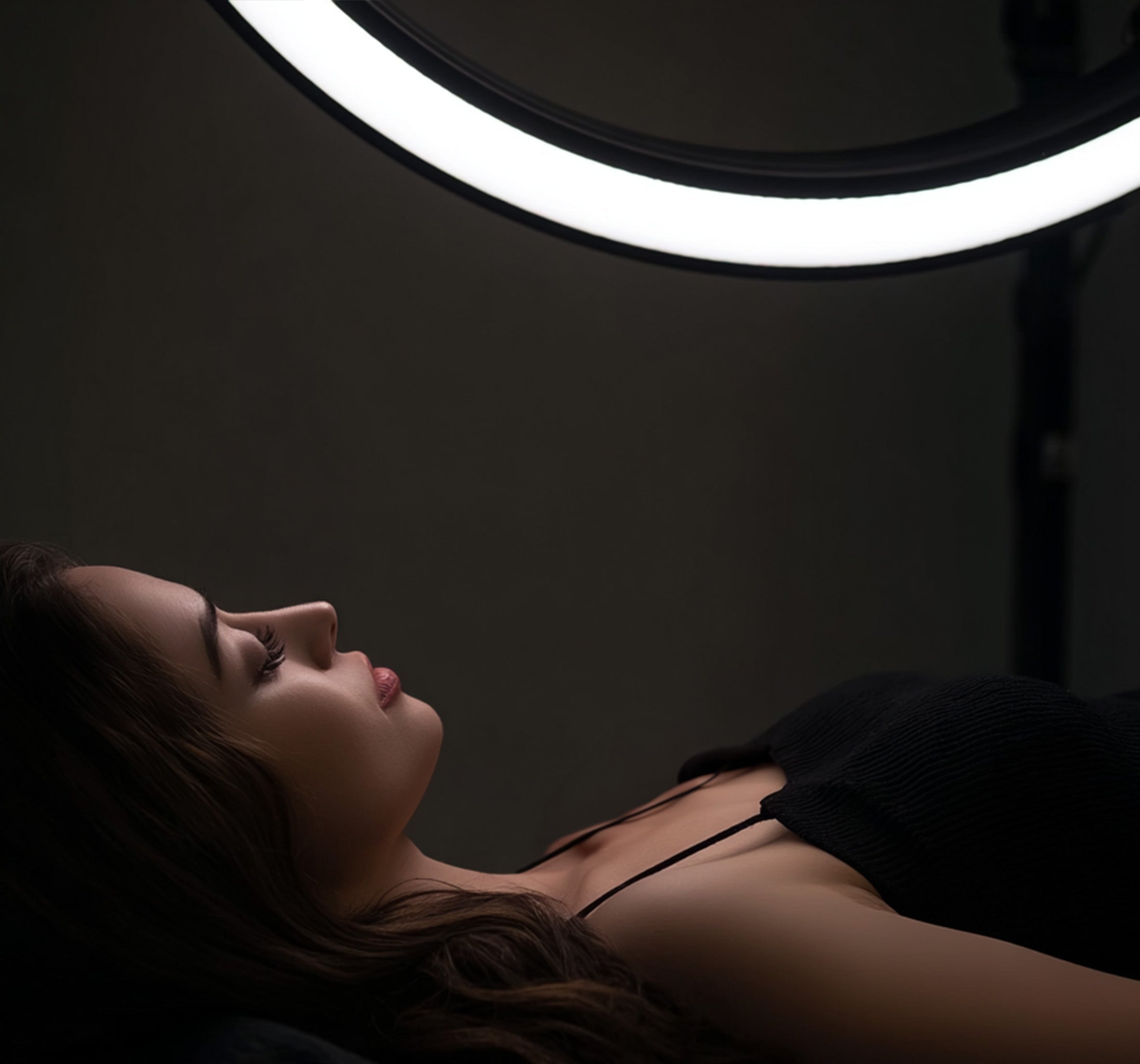
- Light positioned above the client
- Angled toward the lash line
- 18–24 inches away
- No harsh shadows
- No glare hitting your own eyes
- No leaning forward like you're trying to smell their thoughts
Your chair should support you, not punish you.
Your bed should let clients relax, not sink.
Your posture should make your chiropractor proud.
Daily Habits to Save Your Eyes
The 20-20-20 Rule
Every 20 minutes, look at something 20 feet away for 20 seconds.
This resets your eye muscles and prevents fatigue.
Blink. More than you think.
Lash artists tend to stare like owls.
Blink intentionally to prevent dryness.
Hydrate
Your eyes love moisture.
Dehydration = desert eyes.
Humidifier = friend
Glue also behaves better with proper humidity.
Double win.
Annual eye exams
Don’t wait until “things look fuzzy.”
Your vision is a business asset.
Extra Tools That Make a Difference
- Anti-glare glasses
- Clip-on magnifiers
- Medical-grade loupes
- Light diffusers
- Blue-light filters
- Adjustable task lamps
- A proper lash pillow (reduces shadowing from the nose bridge)
These tools turn your lash station into a high-performance cockpit — minus the pilot’s license.
Conclusion
To sum up, your professional workspace lighting setup is more than a lamp. It’s a long-term investment in:
- Better lash work
- Fewer headaches
- Longer career longevity
- More precision
- Happier clients
- Happier YOU
Good lighting doesn’t just help you see better — it helps you work better, feel better, and deliver eyelash extensions results that make clients think you’ve got some kind of superhero vision.
If your lighting has been a thorn in your sight… consider this your sign to upgrade.




%0AIf%20you%E2%80%99re%20a%20lash%20artist,%20your%20eyes%20aren%E2%80%99t%20just%20tools%20%E2%80%94%20they%E2%80%99re%20the%20Beyonc%C3%A9,%20the%20Batman,%20the%20Katniss%20Everdeen%20of%20your%20business.%20They%E2%80%99re%20...)
Leave a comment
This site is protected by hCaptcha and the hCaptcha Privacy Policy and Terms of Service apply.