

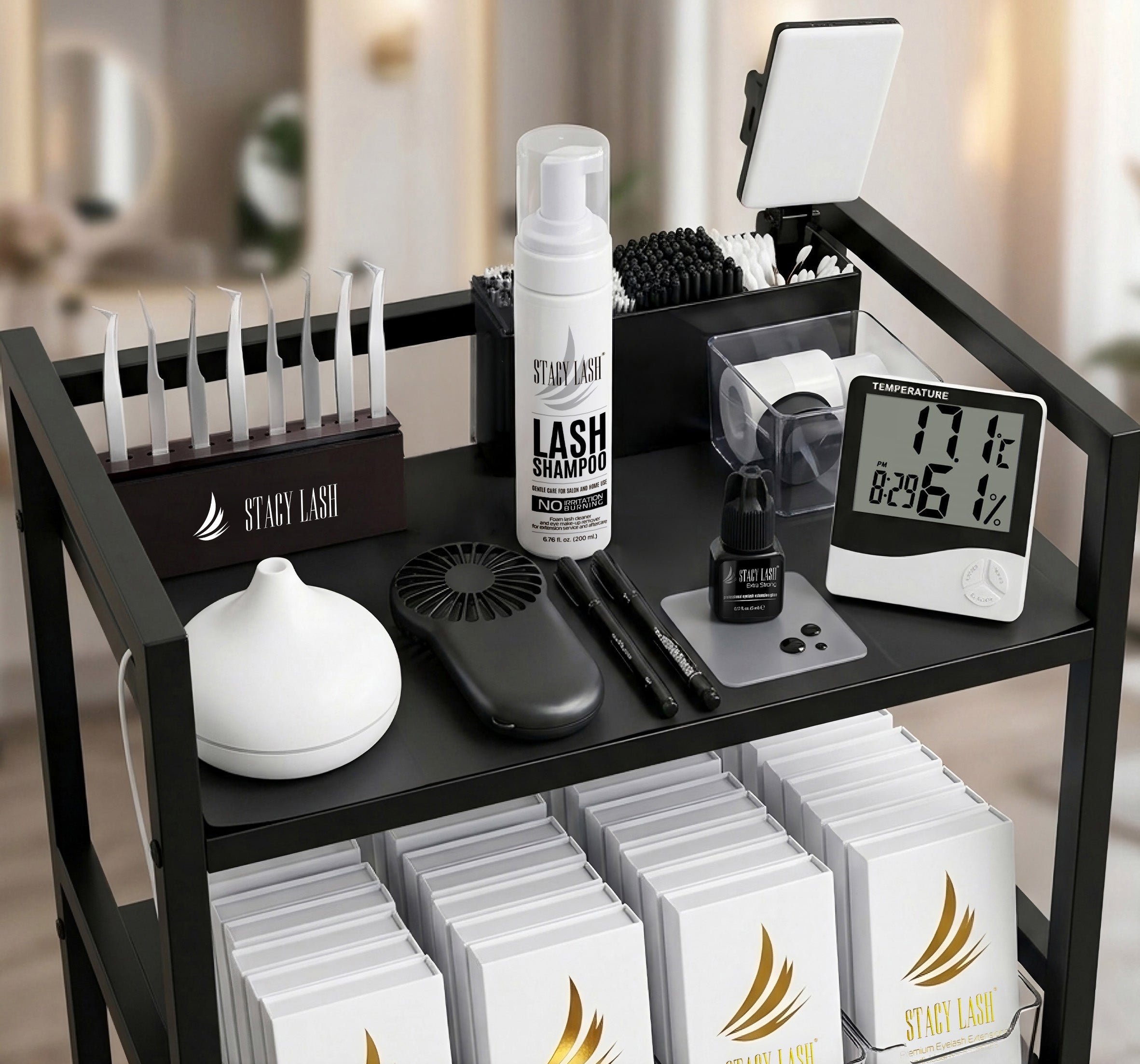
How to Organize Your Lash Studio for Maximum Efficiency and Comfort
If you walk into your lash room and feel a slight sense of dread because of the clutter, you’re already behind the 8-ball. In this industry, your environment is a direct reflection of your service quality. A messy room suggests a messy application. Beyond the aesthetics, a disorganized studio is a time-thief. If you lose five minutes per client looking for supplies, and you see five clients a day, you’ve just thrown away two hours of your life every week.
Let's break down how to stop the spinning wheels and get your space into fighting shape.
Designing Your Lash Studio Layout
The biggest mistake is setting up your room for looks instead of movement. You need to think about your path of least resistance.
Zones over Decor
Divide your room by what actually happens there. Don’t let these tasks bleed into each other.
● The Intake Zone: Keep this near the door. This is where they drop their bags, sign the paperwork, and get the consultation. It keeps the outside world dirt and distractions away from your sterile bed.
● The Application Zone: This is where the money is made. Your stool, your bed, and your trolley. Everything in this zone should be reachable without you having to unplant your feet or twist your spine.
● The Sanitization Zone: This should be near a sink. If you’re walking across the room to wash a brush or drop tweezers in barbicide, you’re wasting miles of movement over the course of a year.
The "Golden Triangle" of Lashing
In the kitchen, it’s the sink, stove, and fridge. In lashing, it’s your Eyes, the Lash Tile, and the Adhesive. If these three things aren't in a tight, ergonomic triangle, you’re going to be slow. Your lash tile should be on the side of your dominant hand or on a headband/pillow to minimize the distance your tweezers travel. Every millimeter of extra movement is a millisecond of wasted time. Over 100 lashes per eye, that adds up fast.
Storage Solutions and Tool Management
If you have to open a drawer to see if you have 0.07 CC curls in 11mm, you’ve already failed the lash room organization efficiency test.
Clear Acrylic and Vertical Space
● Stop Hiding Your Stock: Get rid of opaque boxes. You want to see your stock levels at a glance so you don't run out mid-service. Use clear acrylic organizers for your lash trays, arranged by curl and then by length.
● The Wall is Your Friend: In small lash rooms, the floor is for walking, the walls are for storage. Floating shelves for your primers, cleansers, and eye pads save precious square footage on your trolley.
● Adhesive Care: Don't just throw glue in a drawer. Use an airtight container with silica beads to pull moisture away. Date your bottles with a silver marker the day you crack them open.
Inventory Rotation
When you get a new shipment of lash extensions or glue, put the new stuff at the back. This ensures you’re always using the freshest product and nothing is expiring in a dark corner of your cabinet.
Workflow: 15 Minutes is Everything
Efficient lash workflow isn't about working faster; it's about eliminating the "dead air" in an appointment. If you’re hunting for a jade stone while the client is waiting, you’re losing the "flow state."
Pre-Appointment Staging
- Station Prep: Your tile should be stripped and loaded before the client walks in. If you know they always get a 10-12mm hybrid, have those strips ready.
- The "Drop" Zone: Give your client a specific basket for their phone and keys. It keeps their "stuff" off your clean surfaces and prevents them from reaching for their phone mid-set.
- Sanitize on the Go: Have a dedicated, small bin for used eye pads and micro-brushes right next to your stool. You shouldn't have to stand up until the set is finished.
The Cleanup "SOP"
Have a Standard Operating Procedure. Spend five minutes after every client doing the exact same thing: dispose of disposables, place tweezers in disinfectant, wipe down the bed, and reset the lash tile. If you do it the same way every time, it becomes muscle memory.
Lash Studio Ergonomics and Health: Protecting Your Body While Working
You can’t make money if you’re in physical therapy. Lashing is brutal on the body, and most techs "age out" of the career because of back and neck pain, not because they lost interest.
The Saddle Stool and Body Alignment
If you’re sitting on a flat chair, your lower back is taking the hit. A saddle stool forces your pelvis into a neutral position and keeps your spine stacked.
● Bed Height: The client’s head should be right at your chest level. If you’re reaching up, your shoulders will fry. If you’re hunching down, your neck is done. Your elbows should be at a 90-degree angle when you’re working.
● The "Lash Bridge": Don't rest your wrists on the client's forehead if you can help it. Use a lash pillow with side pockets to stabilize your hands.
● Lighting: Shadows are the enemy of speed. You need a "dual-arm" light (like a Glamcor) to kill shadows from both sides. If you can't see the base of the natural lash perfectly, you'll spend more time adjusting your head than actually lashing.
Hand and Eye Health
● Tweezer Tension: If you have to squeeze your tweezers like you're trying to crush a rock, get new ones. High-quality tweezers should have a "sweet spot" that requires minimal effort.
● Eye Breaks: Every 20 minutes, look at something 20 feet away for 20 seconds. It prevents "accommodation spasm" and keeps your vision sharp for the long haul.
Appointment Scheduling and Client Management
Organization isn't just about where you put your tweezers; it’s about how you manage the human beings in your chair.
● Digital Booking: It’s 2026. If you’re still texting back and forth to book a fill, you’re wasting hours of your life. Use a system that takes deposits and sends automated reminders. This filters out the "tire kickers" and ensures your time is respected.
● The Buffer: Always leave 15 minutes between clients. Use it to reset the room, breathe, and drink water. Trying to go "back-to-back" without a break is how mistakes happen and how burnout starts.
● The Consultation Mirror: Keep a high-quality hand mirror right by the bed. When you finish, don't just say "you're done." Hand them the mirror and let them have their moment. It builds value and justifies your pricing.
Tools and Equipment That Boost Efficiency
You can't "DIY" your way to a six-figure income with cheap tools. You need gear that works as hard as you do.
The Essentials
● Nanomisters/Super Bonders: These allow you to cure the adhesive instantly. This means the client doesn't have to wait 24 hours to shower, and it cuts down on those "fume" complaints.
● Lash Map Stickers: Don't freestyle. Use mapping stickers on the eye pads. It takes 10 seconds to draw a map and saves you 10 minutes of "guessing" which length comes next.
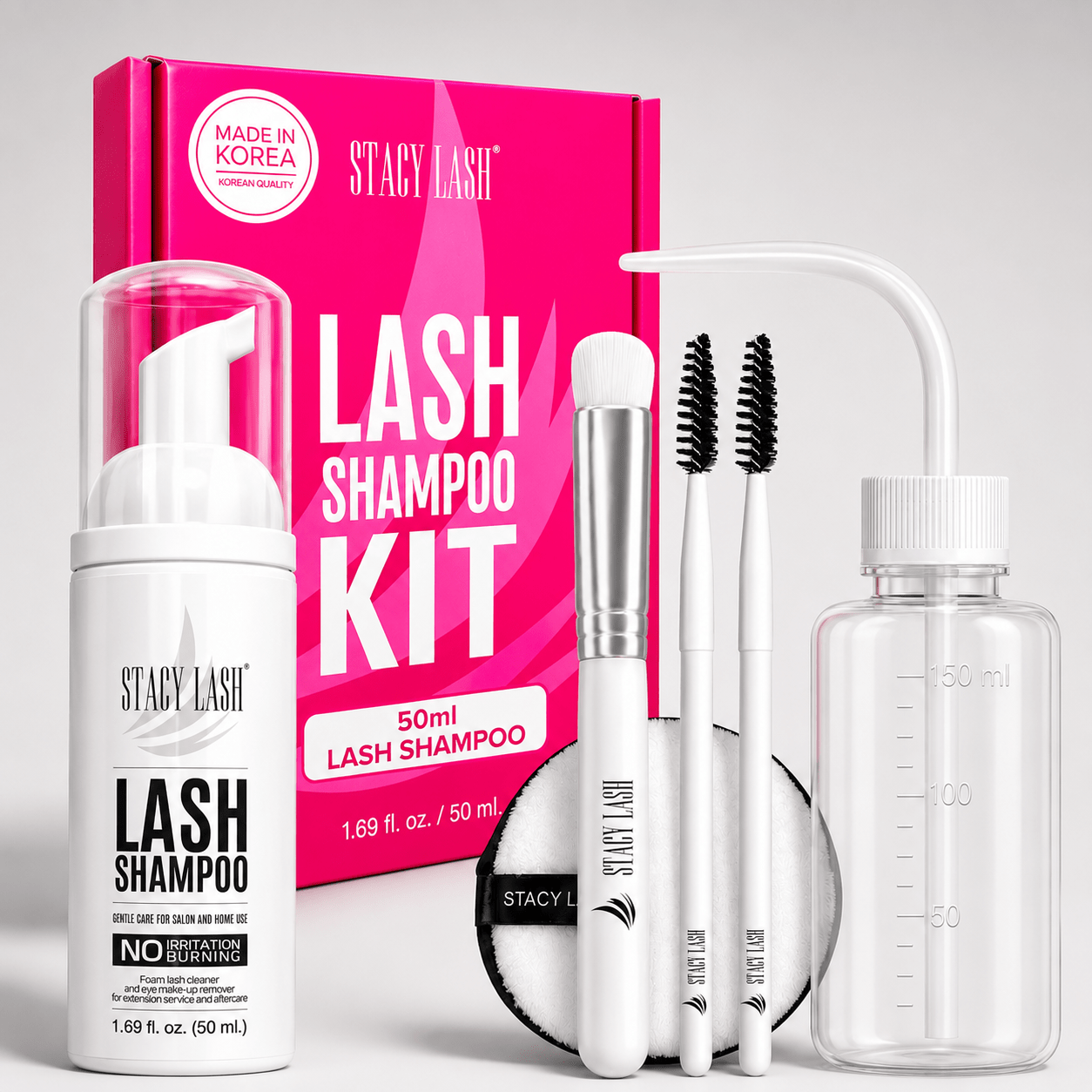
● High-Octane Supplies: Use brands like Stacy Lash for your primers and cleansers. When your prep is solid, your retention is solid. When your retention is solid, you spend less time doing free "fix-it" fills.
Maintaining a Welcoming and Professional Atmosphere
Look, the vibe of your studio turns a one-time walk-in into a loyal regular who wouldn't dream of going anywhere else. If your room feels like a cold, sterile clinic, clients are going to be tense the whole time—and we all know a tense client is a "twitchy" client. But if it’s a cluttered mess, they aren't going to trust you with sharp objects near their eyes.
Start with the lighting: keep the bright, high-intensity LEDs focused strictly on the lashes, but use soft, warm lamps for the rest of the room so it feels like a sanctuary. Pay attention to the "sensory" details, too. Since body temperatures naturally drop when someone lies still for two hours, having a clean, plush blanket ready is a must. Keep your decor minimal and branded, and you’re golden.
Finally, don't be afraid to ask for feedback. A quick check-in like, "How was the temperature for you today?" or "Is this playlist hitting the spot?" shows you’re a high-level pro who actually cares about their total experience, not just someone trying to get through a set as fast as possible. Creating that welcoming atmosphere is what builds your "brand" beyond just the lashes themselves.
FAQ – Quick Answers for Lash Studio Organization
How can I optimize a small lash room?
Mirrors and light colors. Use a rolling 3-tier cart instead of a stationary desk. If you can move your equipment around, the room feels twice as big.
What’s the best way to prevent clutter?
The "Clean Counter" rule. Nothing should live in your workspace that isn't used for every client. If you only use it once a week, put it in a cabinet.
How often should I rearrange or reorganize tools?
Every 90 days, do an audit. Toss the lash trays that are almost empty, check the expiration dates, and see if your layout is still on point. Your business evolves, and your space should too.
The Long Game
Organization isn't about being "neat" or having a Pinterest-worthy aesthetic. It's about lash technician productivity and building a system that allows you to focus 100% of your mental energy on the lashes. When you aren't stressed about finding a tool or dealing with a sore back, your work is better. When your work is better, your clients stay longer and pay more.
Pick one zone of your studio today and fix it. Move your trolley, buy some clear bins, or adjust your stool height. These small, incremental changes are what you will thank yourself for later.





Leave a comment
This site is protected by hCaptcha and the hCaptcha Privacy Policy and Terms of Service apply.