

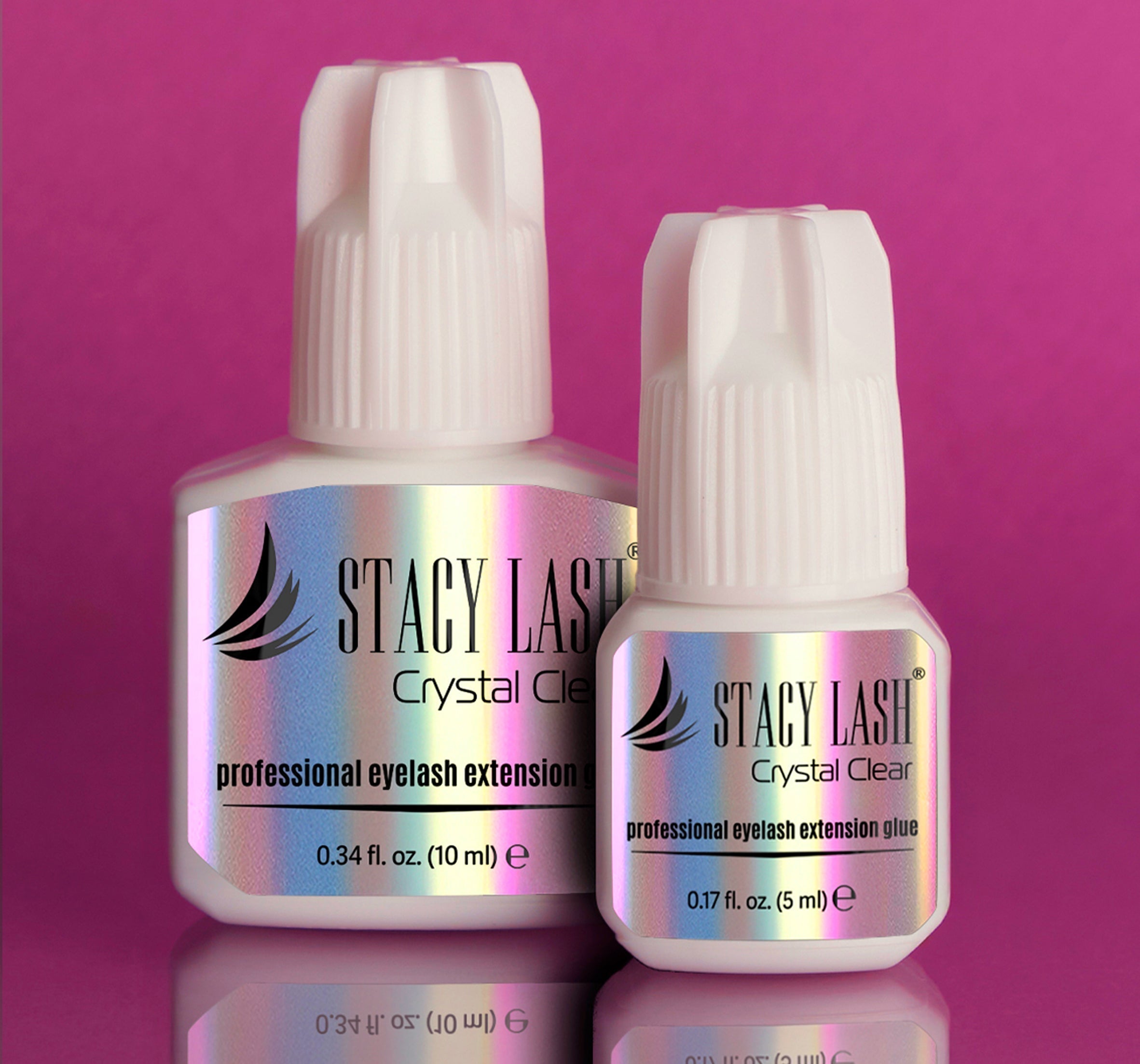
Clear Lash Adhesives
Some say that clear is the new black… And what do you think? Transparent lash adhesives have always been part of the lash scene, even if they haven’t always gotten the hype they deserve. While black glue tends to steal the spotlight—with all its “main character energy”—clear adhesive has been working quietly behind the scenes, making colorful magic without announcing itself. And honestly? That’s kind of its charm.
A modern clear lash extension glue isn’t a backup option or a compromise. It’s a deliberate choice. It’s the difference between using a highlighter pen and a fine-point pencil. When you need color, mood, and a dash of personality, clear adhesive steps up. Today’s transparent formulas are something the industry simply can’t ignore as we are miles ahead of the little versatility we had years ago. We’re talking no carbon black, eternally wider range of sets, creativity, and retention that can absolutely go toe-to-toe with black glue.
Knowing when to reach for clear instead of black is one of those “you’re an artist” moments in a life of a lash pro. It opens the door to more customized services, happier clients, and those masterpiece lash sets that actually look the way you imagined them in your head (or Pinterest).
Clear vs. Black Adhesives: Same Game, Different Superpowers
The difference between clear and black lash glue really comes down to pigmentation. Black adhesives contain carbon black, which gives that deep, dark color and helps disguise the bond along the lash line. Clear adhesives skip pigment entirely and cure completely transparent. No tint, no shadow, no visual footprint.
When artists ask whether clear or black lash glue is better, the real answer is “better for what?” Black glue shines when you want drama, density, and that eyeliner-effect finish. It’s bold, confident, and not trying to be subtle. Clear glue, on the other hand, is all about invisibility. If there’s a tiny bit of excess adhesive, it doesn’t scream for attention. It just minds its business.
This makes clear adhesive especially useful when you’re working with lighter lashes, creative designs, or clients who want a soft, natural result. Clear versus black isn’t a rivalry—it’s a win-win. Different tools, different jobs, same goal: flawless lashes. Always.

Why Carbon-Black-Free Matters (Especially for Sensitive Clients)
One of the biggest professional advantages of clear lash adhesives is what they don’t contain. No carbon black. And while carbon black is regulated and widely used, some clients’ eyes just don’t get along with it. You know the ones—redness, irritation, watery eyes, the whole “why are my eyeballs protesting?” situation. While Cyanoacrylate is still a more common allergen, such kind of sensitivity doesn’t come as a surprise.
Pigment particles can contribute to stronger perceived fumes, especially for sensitive clients or those new to extensions. Clear adhesive removes that risk entirely. Without pigment, the formula is often cleaner and feels gentler, even while delivering serious performance. This is where Stacy Lash Crystal Clear Glue really earns its reputation. It’s fully transparent, contains no carbon black, and is formulated to keep fumes low while still curing fast. With a drying time of 1-2 seconds, it keeps up with professional speed without rushing you into mistakes. And retention? Up to 8 weeks with proper maintenance. That’s not “nice for a clear glue”—that’s just impressive, period.
For clients who have a clear picture of what they want in their head (pun intended), that can be one and only right choice.
When Clear Lash Adhesive Is the Real MVP
Clear adhesive really shows its strength in situations where black glue would actually get in the way. Color lashes are a perfect example. Brights, pastels, neons, fantasy sets—black adhesive can muddy the base and distort the color. Clear glue keeps everything true, clean, and exactly how it’s supposed to look.
Natural sets are another win. For clients who want extensions without obvious drama, clear adhesive creates the illusion that lashes are simply growing that way. No harsh line, no visible bond, but still tells a story. It’s subtle in the best possible way.
Brown, caramel, and light lash styles also benefit hugely from clear glue. Using black adhesive with softer tones can feel like wearing combat boots with a classy office suit—it just doesn’t match the vibe. Clear glue lets those softer shades stay soft.
And then there are clients who simply don’t want a defined lash line at all. Mature clients, minimalists, or anyone chasing that clean girl energy. Clear adhesive gives you that barely-there finish without sacrificing strength.
Choosing a Clear Adhesive That Actually Performs
Not all clear adhesives deserve a spot in a professional kit. A high-quality transparent glue should cure consistently, handle humidity well, keep fumes low, and deliver retention comparable to black adhesives. If it’s slow, unstable, or unreliable, it’s not doing you any favors, just like any other glue. Stacy Lash Crystal Clear Glue checks all the boxes. Transparent formula. Innovative low-fume formula. Stellar retention. It’s designed for artists who don’t want to choose between comfort and performance.
Many seasoned lash artists keep both black and clear lash glue on hand because flexibility is part of professionalism. One client wants bold and dramatic, the next wants soft and invisible. Having the right glue ready isn’t extra—it’s smart.

Clear Glue, Clear Advantage
Clear lash adhesive is a trend, not a downgrade. It’s a strategic choice for pros who don’t just do the same set on each client, and aim for art and versatility. Definitely, clear adhesive proves its worth over and over again.
When you’re looking for the best clear lash glue, the focus shouldn’t just be on color. It should be on formula, performance, and specs. Crystal Clear delivers all of that—quietly, efficiently, and without stealing the spotlight.
Because in the end, mastering clear vs black lash glue isn’t about picking sides and asking is clear or black lash glue better. It’s about knowing exactly which tool to use so your work speaks for itself. And sometimes, the best work is the kind nobody sees… they just admire the result.




Leave a comment
This site is protected by hCaptcha and the hCaptcha Privacy Policy and Terms of Service apply.