

Why Your Lash Fans Keep Closing Up
We’ve all been there: you pull off an absolute miracle on the strip, crafting a handmade volume fan that looks ready for its own Instagram close-up. It is symmetrical, airy, and a total work of art. But the second you seat it onto the natural hair and let go, the extensions snap shut like a clam. Instead of a fluffy fan, you are left with a sad, pointy stick.
Dealing with lash fans closing up is an absolute rite of passage, and frankly, it is enough to make you want to toss your favorite tweezers across the room. Even seasoned veterans get thrown for a loop when their sets suddenly start losing their fluff mid-appointment.
To scale a busy book of loyal regulars, your sets need to stay open, wide, and flawless for weeks on end.
Why Lash Fans Close During Application
When you face volume fan problems, the collapse usually happens because of physics and chemistry teaming up against you. The extensions don't just snap shut for no reason; they are responding to capillary action and structural stress.
Glue Shrinkage
As lash adhesive transitions from a liquid drop to a solid bond, the polymers inside it wrap tightly together and contract. This natural shrinkage pulls everything inward. If the bond cures too slowly, that ongoing structural contraction gradually draws the outer extensions toward the center, closing the gap before the liquid can solidify.
Improper Fan Structure
A fan needs an exact balance between the width of the top flare and the tightness of the base. If your stems aren't perfectly aligned or if they cross over one another like an "X," the foundation becomes completely unstable. The moment you press that uneven base onto a natural lash, the structural tension snaps the top fibers shut.
Attachment Mistakes
If you twist your wrist or use uneven pressure during the actual hand-off, you displace the liquid adhesive. Instead of holding the hair fibers open, the displaced glue travels straight up the body of the fan. Once that liquid leaks into the middle sections, it glues the fan shut instantly.
Slow-Drying Glue Problems
Your liquid bond is the literal engine of your set. If the drying speed is out of sync with your hands, keeping your sets looking airy becomes a massive headache.
How Adhesive Speed Affects Fans
If you are working with an adhesive that takes 3 seconds to set, but you release your tweezers after one second, the glue is still entirely fluid. Without the constant tension of your tweezers holding the fan open, the wet adhesive pulls the fibers together into a single point. To maintain open fans, you need a snappy bond that locks the extensions in place the millisecond they touch the natural lash line.
Humidity and Temperature Issues
Lash adhesive is incredibly touchy about room conditions. If your space is too dry, your glue slows down to a crawl because it lacks the ambient moisture required to cure.
, wide split.
Keep your digital hygrometer right next to your workspace to ensure your humidity stays in the optimal zone. If your room dips below forty percent, turn on your humidifier to kick the curing process into high gear.
When to Use a Glue Booster
If your workspace is cold or dry and your glue is dragging its feet, a glue booster or retention accelerator is an absolute lifesaver. Applying a tiny drop to the base of the extensions while they are still on the strip prevents the liquid from climbing up the fibers, freezing the fan in a wide, open position the moment it dips into the tile.
Releasing the Fan Too Early
Moving too fast during the hand-off is a classic trap that compromises your retention and ruins your symmetry.
Correct Tweezer Release Technique
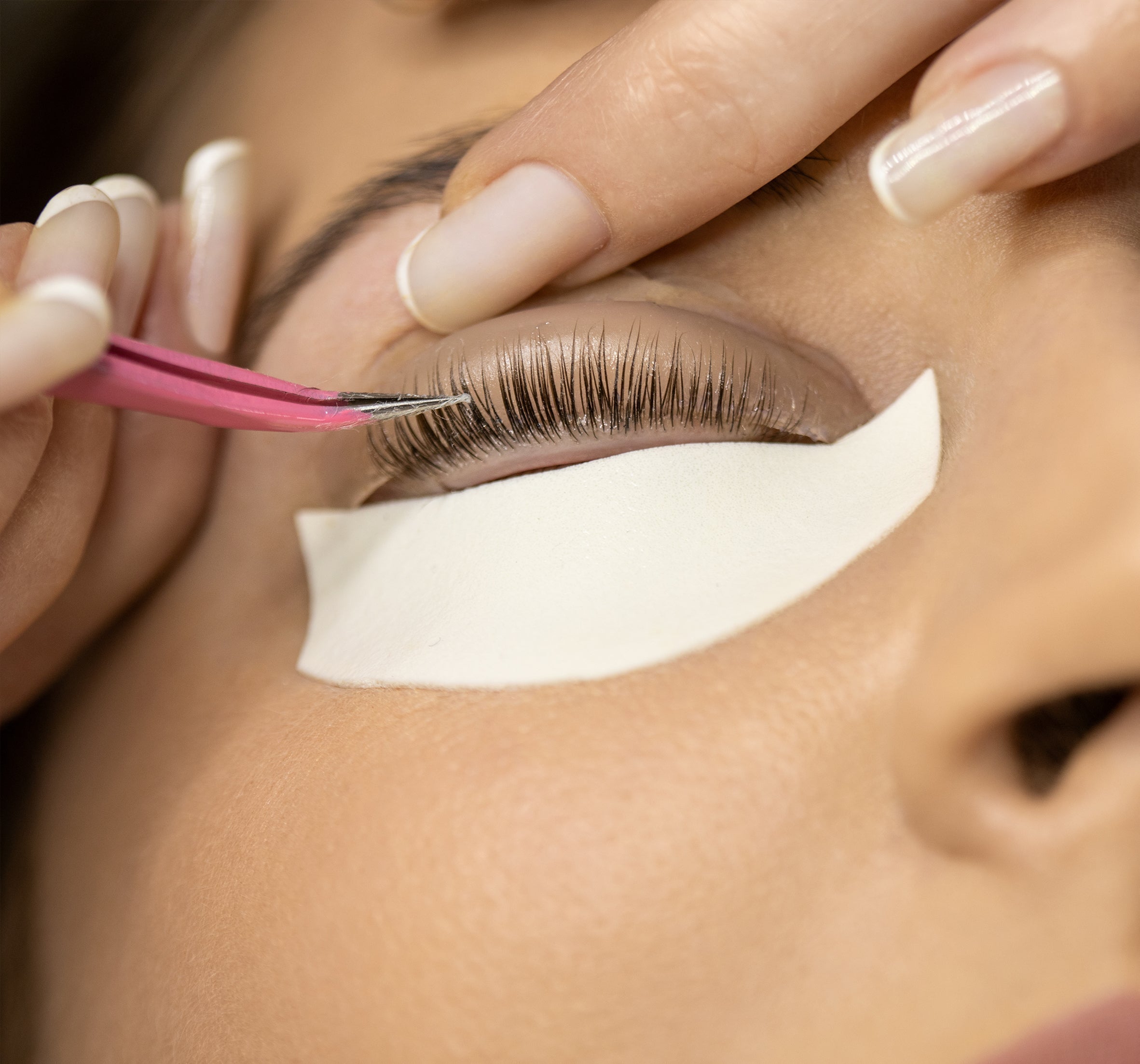
When you position your fan onto the natural lash, do not just snap your tweezers open and walk away. You need to use a deliberate, two-step release. Once the fan is seated at a forty-five-degree placement angle, relax your hand tension by half.
If the stems hold their ground and the fan remains wide, open your tweezers completely and slide them away smoothly. This controlled release stops the sudden bounce of the steel from shocking the wet adhesive and pulling the fan closed.
Fan Width Problems
Mastering how to stop volume fans from closing requires you to think ahead and look at how the glue behaves as it sets.
Why Narrow Fans Close Faster
If your fans are tight and narrow from the start, you are leaving zero margin for error. As the adhesive contracts during the drying phase, a narrow fan will collapse into a single point almost instantly.
Creating Wider, Stable Fans
The best technique for wide lash fans is to make your initial flare slightly wider than your final target look. Anticipate that slight chemical shrinkage. By giving the extensions an extra millimeter of breathing room on the strip, the natural contraction of the curing glue pulls them right into a perfectly balanced, stable fan instead of a closed stick.
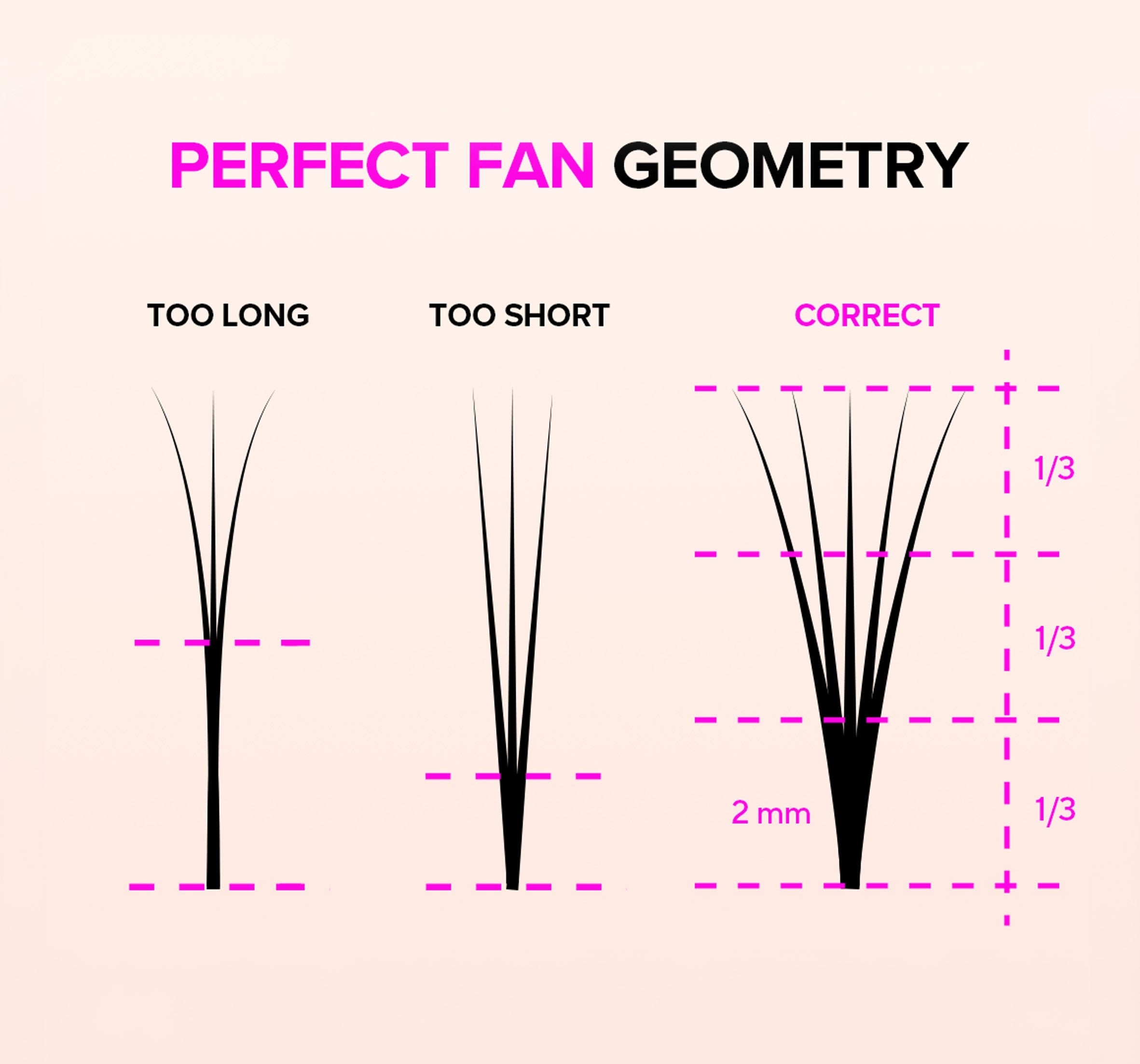
Incorrect Fan Base Length
Proportions are everything when you are working on advanced texturing. If your stem dimensions are off, the entire architecture of the fan fails.
Long Base: >1/2 Length ===> Too much surface contact -> Glue climbs up -> Fan shuts.
Ideal Base: 1/3 Length ===> Perfect balance -> Clean attachment -> Stays fluffy.
Why Long Bases Collapse
If the stem of your fan accounts for half the total length of the extension, you are running into a major design flaw. A long base drastically increases the surface area where the individual hairs run parallel to each other. Capillary action forces the liquid glue to run straight up that long seam, acting like a magnet that pulls the top fibers together.
The Ideal Base Ratio
Keep your bases compact and tight—ideally around one-third of the total fan length. This distribution leaves the remaining two-thirds free to flare out beautifully without any heavy adhesive weight pulling them down.
Using Too Much Glue
It is easy to fall into the trap of thinking more glue equals better retention, but excess adhesive is the ultimate enemy of a clean, fluffy set.
How Deep to Dip the Fan
Never dunk your volume fans deep into the adhesive drop like a cookie into milk. You only want to dip the absolute bottom one to two millimeters of the stem. If you submerge the fan past that baseline, the extra liquid fills the gaps between the hairs, completely ruining your fluff and turning your volume fan into a heavy, solid block.
Excess Glue and Fan Collapse
When you pull a fan out of the glue tile with a massive bead hanging off the bottom, that extra volume creates a heavy chemical pull. As that large droplet dries, the surface tension is strong enough to warp your placement, twist the base, and drag the outer extensions inward until the fan closes up completely.
Smooth vs. Porous Natural Lashes
If your client has highly porous hair cuticles, their lashes absorb the adhesive like a sponge, locking the fan in place instantly. But if you are dealing with glass-smooth, non-porous natural hair, the liquid has nothing to grab onto. Using a simple dip-and-place method on smooth hair means the fan will slide around and snap shut the moment you let go.
When the Sliding Technique Works Better
For those ultra-smooth, slick natural lashes, switch over to a sliding placement technique. Instead of just dropping the fan onto the hair, touch the base of the fan to the natural lash and slide it smoothly down the hair shaft for a millimeter before locking it at the root. This action spreads the adhesive uniformly, triggers faster crystallization, and ensures the fan stays wide and stable the moment your tweezers open.
How to Keep Volume Fans Open and Fluffy
Consistency separates premium lash artists from the rest of the pack. To keep your work looking consistently airy, you have to master your tool handling and fluid control.
- A Symmetrical Flare: Ensure the space between every single extension in your fan is completely uniform before you lift it off the adhesive strip.
- The Right Tool Grip: Use high-performance, hand-tested lash tweezers with a wide sweet spot so you can clamp the entire body of the fan without pinching the stem.
- Perfect Fluid Control: Keep your adhesive drops fresh by changing them out every fifteen minutes. A sticky, thickening glue drop will ruin your fans instantly.
- A Rock-Solid Base: Always ensure your stems are seamlessly fused into a sharp, pointed point rather than a split or boxy base.
Common Volume Fan Mistakes Lash Artists Make
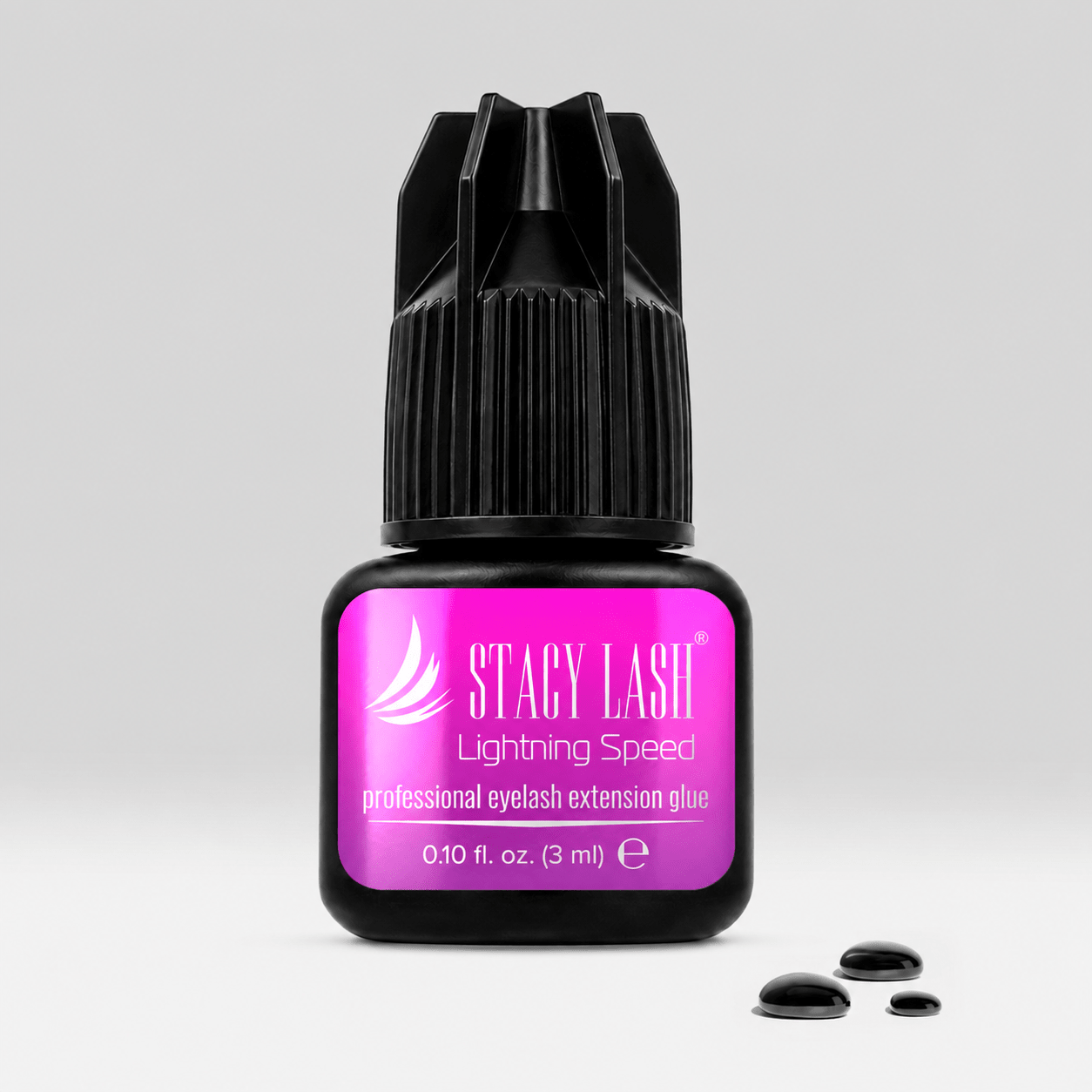
One of the biggest blunders is trying to stretch a bottle of adhesive past its prime to save a few dollars. If your bottle has been open for more than four weeks, the liquid inside has already started to degrade from exposure to air. This older glue becomes thick, stringy, and incredibly slow to cure, which makes your volume sets clump up like crazy. Keep your workstation fresh by sourcing premium lash glue that delivers consistent performance under real studio pressures.
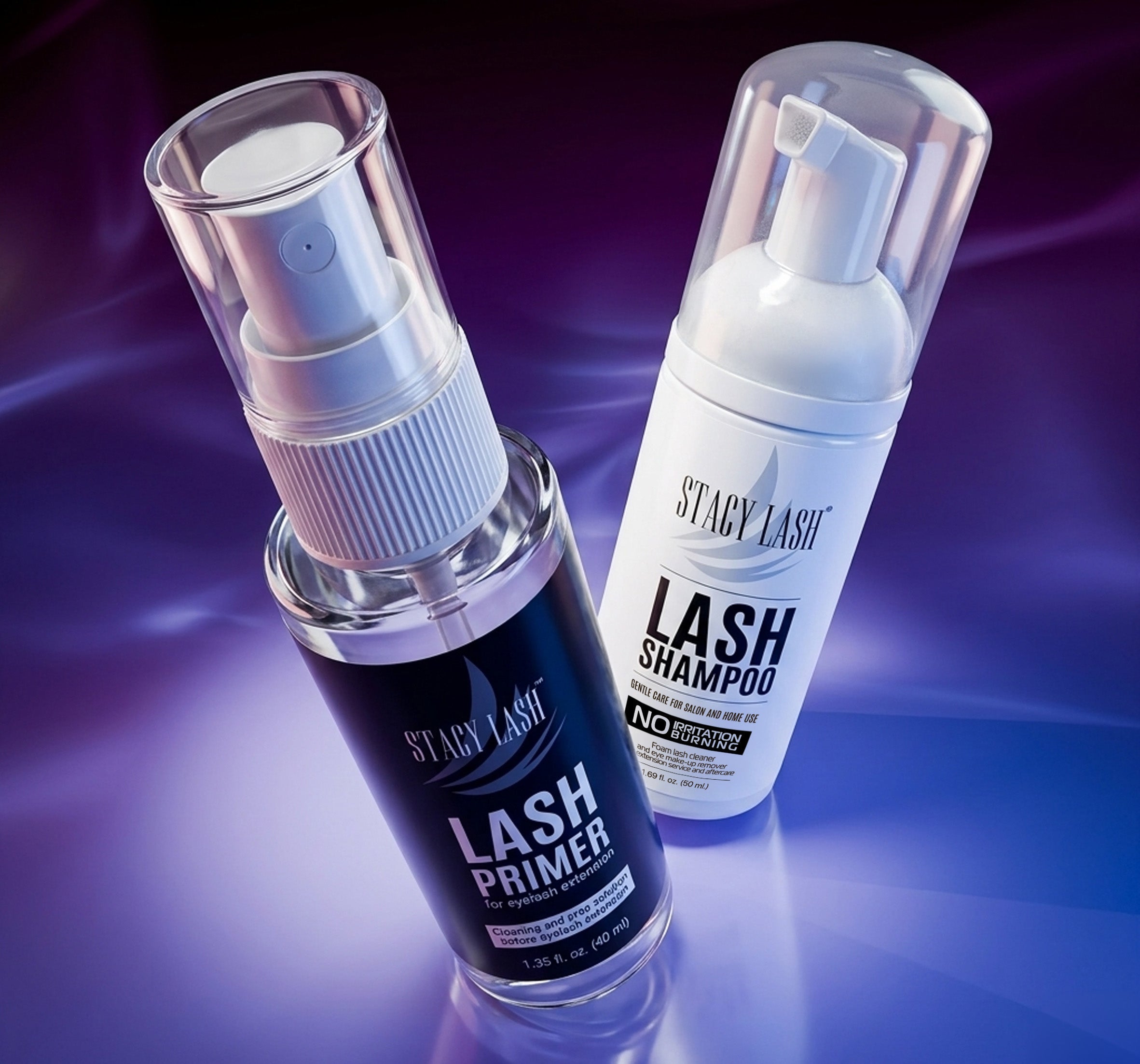
Another frequent error is skipping the thorough cleaning step before lashing. If there is a microscopic layer of facial oil or dust clinging to the client's hair, the adhesive cannot form a clean bond. The liquid will ball up on top of the grease, causing the fan to tilt sideways and close up immediately. Always execute a deep lash bath to clear the path for a permanent, seamless bond.
Master the Mechanics
Nailing flawless volume lash extensions sets is about controlling the science on your lash tile. By adjusting your room's humidity, managing your dipping depth, and slowing down your tweezer release, you eliminate the variables that cause your work to collapse. Treat your tools with respect, pay attention to your base proportions, and keep those fans wide, fluffy, and completely iconic.
FAQ
Q: Why do my volume lash fans keep closing up?
A: The primary causes are using too much adhesive, working with a glue that cures too slowly for your hands, or releasing your tweezers before the bond has solidified. Low room humidity can also stall your glue's dry time, causing the fan to collapse.
Q: How deep should I dip my volume fan into the glue?
A: Only submerge the bottom one to two millimeters of the stem. Dipping any deeper allows excess liquid to climb up the hair fibers, which glues the fan shut.
Q: Does a glue booster help keep lash fans open?
A: Yes! A booster accelerates the curing process and acts as a barrier that prevents wet adhesive from wicking up the body of the fan, locking the extensions in a perfect, wide split.
Q: What is the ideal base length for a stable volume fan?
A: Your stem should take up about one-third of the total length of the extension. This ratio provides a solid attachment zone without making the fan top-heavy or prone to collapsing.




Leave a comment
This site is protected by hCaptcha and the hCaptcha Privacy Policy and Terms of Service apply.